1/14 RC Excavator: 680° Rotation for All-Terrain Play
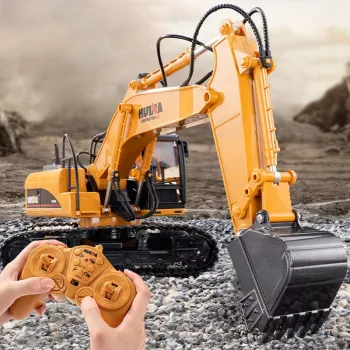
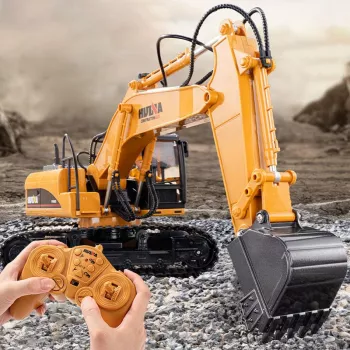
1/14 RC Excavator with 680° Rotation for All-Terrain Digging Play
A realistic RC excavator turns everyday spaces into a hands-on construction zone—whether that’s a living room play mat, a backyard patch of dirt, or a sandbox at the park. A 1/14 scale model is large enough to feel “machine-like” in motion, while features like wide rotation help with tight maneuvering and repeated scoops. Add all-terrain movement and remote-controlled arm and bucket actions, and you get a toy that’s built for scooping, lifting, carrying, and dumping with satisfying control.
What Makes This RC Excavator Stand Out
Construction play gets a big boost when a toy behaves more like the real thing. With a larger 1/14 scale footprint, it’s easier to see the arm angles and bucket position while kids practice careful movements. The standout feature is the wide 680° rotation range, which helps the upper structure reposition for repeated digging cycles without constantly driving the base back and forth.
- 1/14 scale size for a more realistic presence than mini desktop models
- 680° rotation to reposition the upper structure without constant base movement
- All-terrain capability for use on dirt, gravel, short grass, and packed sand
- Construction-style arm and bucket movements for digging, carrying, and dumping
- A high-impact play option for kids who enjoy vehicles, building sets, and outdoor play
If you’re shopping for a feature-forward model, see the 1/14 RC Excavator with 680° Rotation – All-Terrain Remote Control Construction Toy for a build that’s designed around rotation, terrain handling, and classic excavator actions.
Key Features to Look For in Everyday Play
Not every RC excavator feels smooth and predictable—especially once kids start trying precision jobs like loading cups, filling a toy dump truck, or leveling a small mound. The best everyday experience usually comes down to how controlled the rotation feels, how cleanly the bucket releases material, and how stable the base stays when the arm extends.
- Rotation control: smoother turns and the ability to line up the bucket with a target pile
- Arm reach and bucket action: enough range to scoop, lift, and release material cleanly
- Traction and stability: treads or wheels that stay planted while the arm is extended
- Remote responsiveness: predictable controls that help beginners improve precision
- Build quality: joints and moving parts that feel snug rather than wobbly
Quick Specs Checklist (Use While Comparing Models)
| Spec | Why it matters | What to confirm before buying |
|---|---|---|
| Scale | Determines size and realism | 1/14 scale |
| Rotation range | Helps reposition the cab efficiently | Up to 680° rotation |
| Terrain handling | Expands where it can be used | All-terrain use (yard, sand, gravel) |
| Control functions | Defines what actions are possible | Drive + rotate + arm/bucket control |
| Replacement parts | Extends product lifespan | Availability for bucket/arms/remote/battery |
Where It Performs Best: Indoor, Yard, Sand, and Gravel
All-terrain doesn’t mean “anything goes,” but it does mean you can move beyond a perfectly smooth floor. The most fun comes from surfaces that provide light resistance—enough to scoop and push material—without packing grit into joints or overloading the drive system.
- Sandbox play: ideal for digging channels, filling small dump trucks, and shaping mounds
- Backyard terrain: works well on packed dirt and short grass; avoid deep mud to protect moving parts
- Driveway gravel: good for pushing and scooping light material; keep stones away from gears
- Indoor use: best on rugs or play mats; reduce wear by avoiding hard impacts on tile/wood
- Tip: create a simple “job site” with cones, cups, and small containers for loading and unloading tasks
For family play, a good rhythm is to set up two “zones”: a dig zone (sand/dirt pile) and a dump zone (bucket, tray, or container). That simple structure keeps kids focused and helps them practice repeating the same motion—line up, scoop, rotate, dump—until it looks smooth.
Setup and Controls: Getting Smooth Movement Fast
Kids tend to jump straight to digging, but a few minutes of practice makes the excavator feel much more controllable—especially on uneven ground where quick moves can cause tip-overs or messy dumps.
- Charge/insert batteries fully before the first session for consistent power
- Start with basic driving and rotation practice before adding arm and bucket movements
- Use small, gradual inputs for cleaner scoops and fewer tip-overs on uneven ground
- Keep the base stable while lifting; reposition the excavator rather than overreaching
- Run short practice “missions”: dig a trench, move a pile, then level a surface
Care, Storage, and Safety Notes
For general toy safety guidance and age-appropriate play tips, see the CPSC toy safety resources and the American Academy of Pediatrics information at HealthyChildren.org.
If an adult is setting up a dedicated play area (or maintaining a storage shelf, bins, or a small sandbox frame), a basic tool can help with quick adjustments; the 18″ Aluminum Pipe Wrench is an option for household tightening tasks outside of play.
A Strong Gift Choice for Construction Fans
FAQ
What does 680° rotation mean during play?
It means the upper structure can rotate beyond a full 360° turn, so you can keep scooping and dumping in different directions without constantly repositioning the base. The exact usable rotation can vary by design, especially depending on how wiring and internal routing are managed.
Can it handle sand, dirt, and small gravel?
Yes—typical backyard surfaces like sand, packed dirt, and small gravel are a good match for all-terrain play. Avoid deep mud or water, and clear grit from joints and treads after use to reduce wear.
Is a 1/14 scale excavator big enough for outdoor play?
In most cases, yes: 1/14 scale is generally large enough to scoop and move light material in a sandbox or yard. It’s not meant for heavy rocks or large sticks, and performance will vary with surface resistance and load size.







Leave a comment