Cat Body Language Cheat Sheet: Tails, Ears, Meows
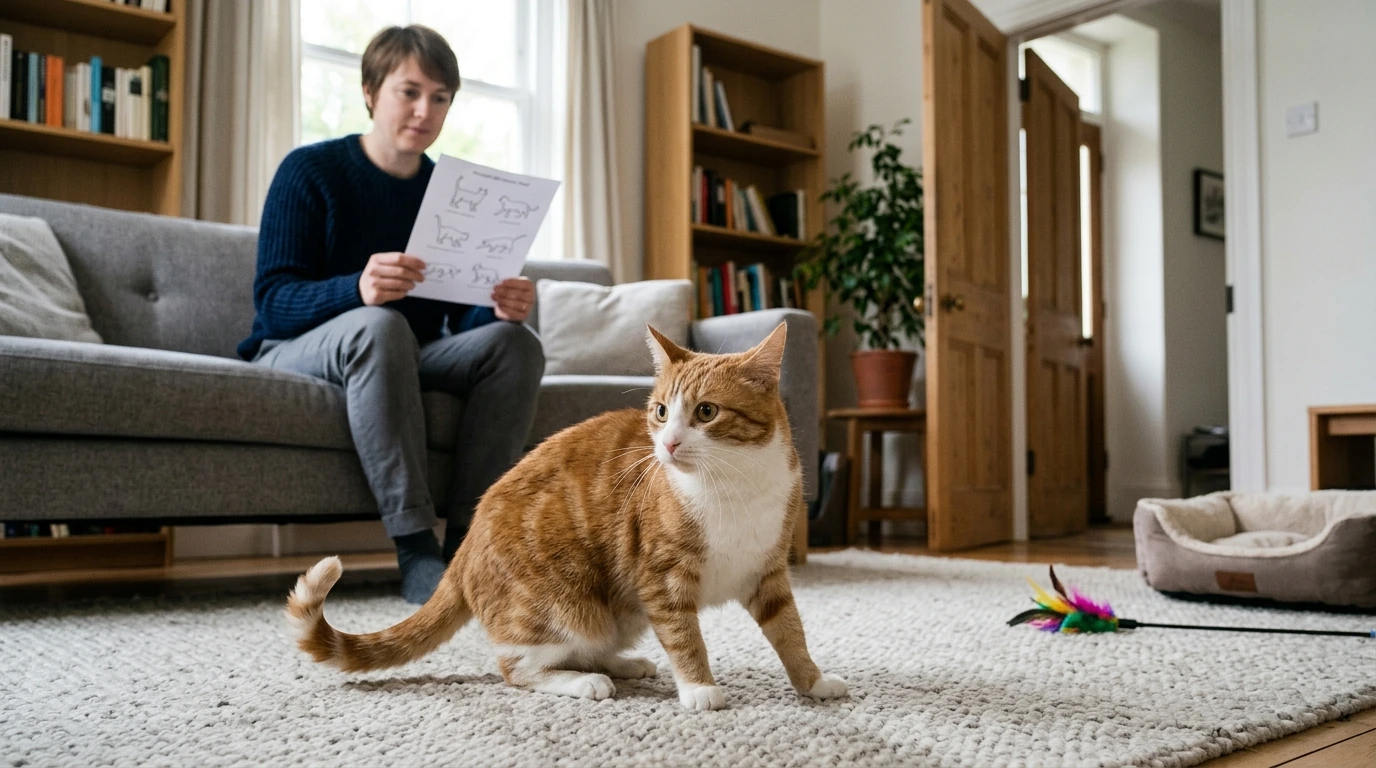
Cat Body Language & Behavior Cheat Sheet: Understand Signals, Postures, and Meows
Cats communicate constantly—just not always with obvious “yes” or “no” signals. A quick-reference guide makes it easier to spot stress early, respond appropriately, and build trust through daily interactions. Use the sections below to decode common postures, facial cues, tail and ear positions, vocalizations, and context-based behaviors, then keep a printable cheat sheet where it’s easy to glance at during real-life moments.
How to Read Cat Communication: Start with the Whole Picture
The most reliable way to interpret cat body language is to combine at least three clues: overall body posture, facial signals (eyes/whiskers/ears), and context (what happened right before). A single signal can be misleading, but clusters tend to be consistent.
- Compare what you’re seeing to your cat’s normal baseline—small changes (slightly tighter body, less blinking, quieter behavior) often matter more than one dramatic moment.
- Watch for common misreads: purring can occur during pain or stress; belly-up can be trust or a defensive “trap”; slow blinking is friendly while a hard stare can be pressure.
- When uncertain, choose distance and choice: pause, back off, offer an exit route, and let your cat approach. This prevents escalation and builds confidence.
Body Postures: Relaxed, Curious, Defensive, or Ready to Pounce
Think of posture as your “headline” signal—then confirm it with the tail, ears, and eyes.
- Relaxed: loose muscles, weight evenly distributed, lounging on the side, smooth fur. Often paired with soft eyes or slow blinks.
- Curious/engaged: forward lean, upright sit, head and neck extended, tail moving with controlled swishes. Common before investigation or play.
- Defensive fear: crouched low, paws tucked, body angled away, ready to bolt. Some cats freeze first, then sprint.
- Defensive aggression: arched back, piloerection (fluffed fur), sideways stance to look bigger. Often paired with hissing or growling.
- Prey/play sequence: stalk → crouch → butt wiggle → pounce. Redirect this energy to a toy rather than hands or feet to prevent rough-play habits.
Tail Signals and What the Speed of Movement Changes
A cat’s tail is less like a dog’s “happy flag” and more like an arousal meter. Height, shape, and speed all matter.
- High tail (often with a soft hook at the tip): friendly, confident greeting—common when approaching favored people.
- Low tail: uncertainty or caution; check ears and body tension before handling.
- Tucked tail: fear or submission; reduce noise, allow hiding, avoid forced contact.
- Slow swish: focused attention; can be curiosity or mild annoyance depending on eyes and ears.
- Fast thumping: agitation; pause petting and increase distance to prevent a swat or bite.
- Puffed tail: alarm; end the interaction, remove triggers, and provide a safe retreat.
Ears, Eyes, and Whiskers: Small Changes That Speak Loudly
Facial signals can change in seconds, especially during petting, play, or introductions. If you notice a shift, lower intensity before your cat feels the need to escalate.
- Ears forward: interest; with a relaxed face, this suggests calm engagement.
- Ears sideways (“airplane ears”): uncertainty or irritation; stop advancing and reassess.
- Ears pinned back: fear or defensive aggression; avoid handling and reduce stimulation.
- Soft eyes/slow blink: comfort and social trust; respond with a slow blink and calm voice.
- Wide pupils: can mean play, fear, pain, or low light—confirm with body tension and environment.
- Direct stare: pressure or challenge; break eye contact and give space.
- Whiskers forward: excitement/interest; whiskers pulled back tight: stress or defensive state.
Meows, Purrs, and Other Sounds: What to Listen For
Quick Cheat Sheet: Signals and Safe Human Responses
| What you see | Likely meaning | Best response |
|---|---|---|
| Slow blink, loose body, tail resting | Comfort and trust | Slow blink back; speak softly; offer gentle interaction |
| Tail thumping, ears sideways, skin twitching | Overstimulated/irritated | Stop petting; give space; switch to a toy or end session |
| Crouched low, tail tucked, ears back | Fear or uncertainty | Reduce noise; allow hiding; avoid picking up |
| Arched back, puffed tail, sideways stance | Alarm/defensive display | Back away; remove trigger; provide escape route |
| Head-butt or cheek rub | Affiliation/scent marking | Let the cat rub; offer a calm greeting |
| Butt wiggle, focused stare, pounce posture | Play/hunt drive | Redirect to wand toy; avoid hands/feet play |
Common Everyday Situations and What the Signals Usually Mean
Make It Easy to Practice: A Printable Reference for Daily Use
Keeping a one-page guide on the fridge, near the feeding area, or by the carrier reduces guesswork when things get hectic. For a ready-to-print option, see the Printable Cat Body Language & Behavior Cheat Sheet and use it as a shared “family language” so everyone responds consistently.
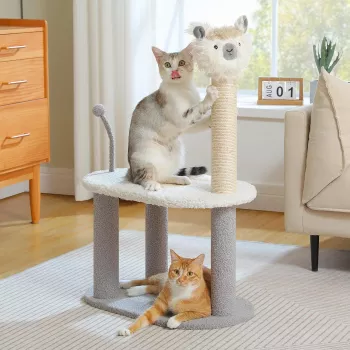
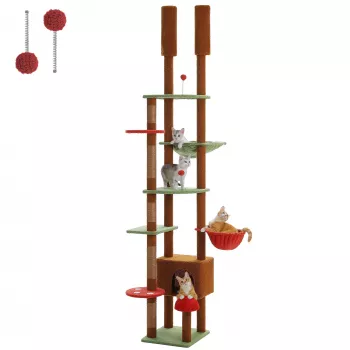
Communication improves faster when cats feel regulated and enriched. If your cat is craving height, hiding options, and scratching outlets, adding a sturdy climbing space like the 5-Level Cat Tree with Large Hammock for Indoor Cats can reduce tension and help redirect energy into healthier routines.
For deeper behavior guidance, these references are widely used in feline care: American Association of Feline Practitioners (AAFP) – Cat Friendly Resources, International Cat Care – Understanding Cat Behaviour, and ASPCA – Cat Behavior.
FAQ
Does a wagging tail mean a cat is happy?
Not usually. Tail motion in cats often signals arousal or irritation—especially fast thumping—so it’s smart to pause petting and read the ears and eyes before continuing.
Why does my cat purr while hiding or acting tense?
Purring can be self-soothing during stress or discomfort, not just contentment. If purring comes with hiding, low appetite, lethargy, or a tight/guarded posture, a veterinary check is a good idea.
How can overstimulation bites be prevented during petting?
Keep petting sessions short and predictable, focusing on head and cheeks, and stop at early warning signs like tail flicks, skin twitching, or ears turning sideways. Give breaks and redirect to play with a toy rather than using hands.










Leave a comment