Rustproof Corner Caddy: Adjustable Shelves That Stay Dry
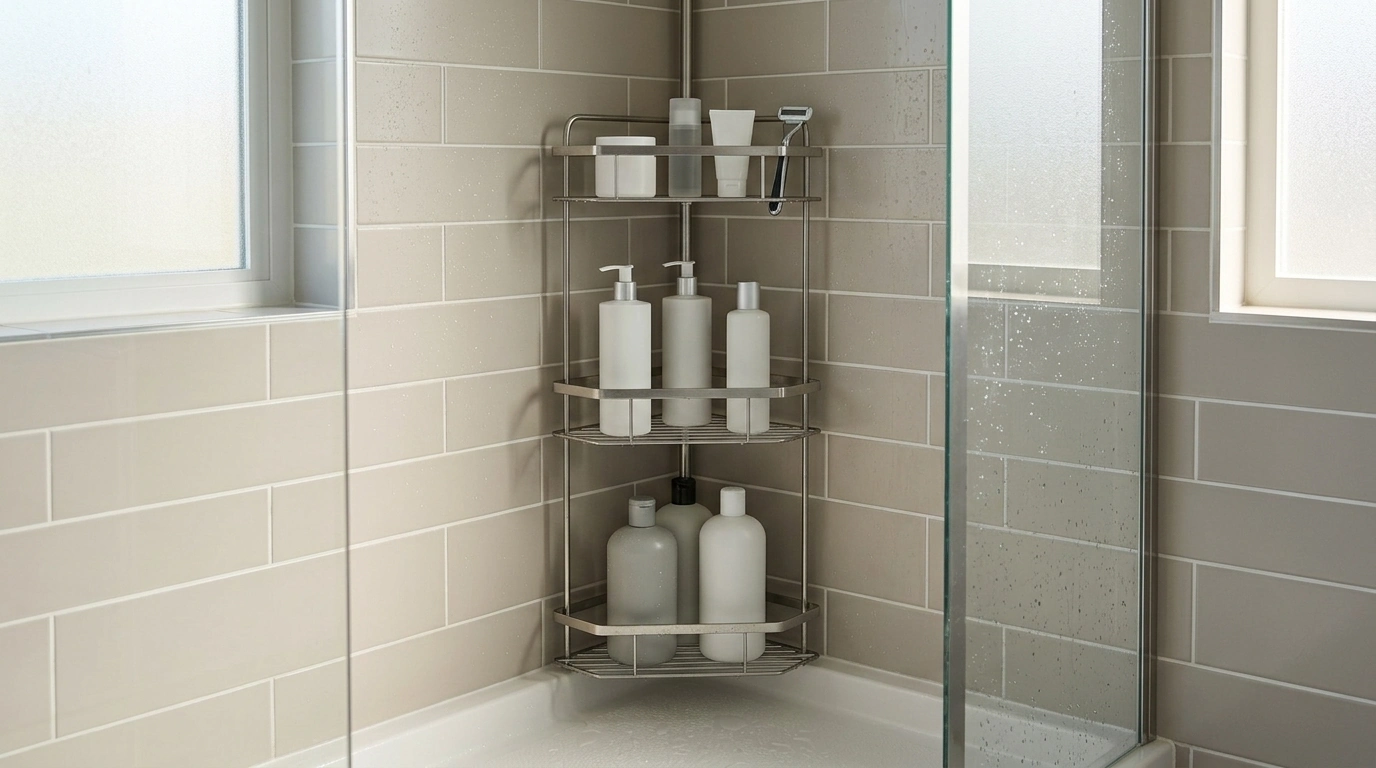
A well-designed corner caddy keeps bottles off the tub ledge, reduces clutter, and helps the shower dry out faster. This guide breaks down what matters most in a rustproof shower corner caddy with adjustable shelves—materials, fit, drainage, stability, and day-to-day usability—plus practical setup and care tips.
Why a corner caddy changes the feel of a shower
A corner caddy makes the shower feel more open because it turns unused vertical space into organized storage. Instead of balancing bottles on a narrow tub edge or leaving them on the floor near the drain, everything gets a consistent “home” that’s easy to reach.
- Frees up floor and tub-edge space, making the shower easier to step into and clean around.
- Keeps frequently used items within reach while minimizing bottle tipping and slippery soap buildup.
- Improves organization for shared bathrooms by giving each person a predictable spot for essentials.
- Helps reduce standing water around products when shelves drain and items are stored upright.
What “rustproof” means in real bathrooms
Bathrooms are a tough test: constant humidity, frequent temperature changes, and residue from soap and hard water. “Rustproof” should signal corrosion-resistant materials and smart construction—not just a shiny finish on day one.
- Look for corrosion-resistant metals (such as stainless steel or aluminum) or well-coated steel designed for constant humidity.
- Pay attention to joints, welds, and screw points—rust often starts where water sits or coatings are thinnest.
- Ventilation and drying habits still matter; even rust-resistant materials last longer when the shower can dry between uses.
- If the caddy uses suction or adhesives, confirm that contact points won’t trap water against the wall surface.
Common rust-risk areas and how to avoid them
| Area | Why it rusts or degrades | What to look for |
|---|---|---|
| Shelf corners and seams | Water pools in tight angles | Rounded corners, smooth welds, open-wire or slotted drainage |
| Fasteners and hooks | Small parts can be lower-grade metal | Matching corrosion-resistant hardware, sealed ends, coated hooks |
| Coatings (paint/plating) | Scratches expose base metal | Thicker coating, scratch-resistant finish, no sharp edges |
| Wall contact points | Moisture gets trapped behind pads | Non-absorbent pads, minimal surface coverage, easy-to-remove mounts |
Adjustable shelves: how to set spacing for real bottles
Adjustability is most useful when it’s set up around what you actually use. Start by grouping items into “tall daily,” “short daily,” and “occasional” so shelf spacing supports stability instead of forcing bottles to lean.
- Measure tall items first (pump shampoo, conditioner, body wash) and set one shelf height to clear pumps without scraping.
- Create a “daily reach” zone: place the most-used products at chest level; store backups higher or lower.
- Reserve a shallow shelf height for razors, facial cleanser, and smaller bottles to prevent them from falling over.
- If shelves can be repositioned, keep heavier items lower to improve stability and reduce strain on mounts.
A practical rule: if a full bottle could “thump” the wall when you set it down, it’s probably too high. Lowering heavy items reduces wobble and makes the caddy feel more secure.
Fit and stability in different shower types
Even a great caddy won’t perform well if it fights the shower surface. Corners can be slightly rounded, tile can be uneven, and grout lines can interfere with mounting points. A quick surface check prevents most slipping or tilting issues.
Quick fit checklist by shower surface
| Surface | Potential issue | Practical workaround |
|---|---|---|
| Glossy tile | Suction may slip if residue remains | Degrease and dry fully before mounting; recheck after 24 hours |
| Textured tile/stone | Poor suction seal or uneven contact | Use tension/overhead systems or hardware designed for texture |
| Fiberglass/acrylic | Adhesives can bond strongly | Use removable adhesives and test a small area first |
| Grout-heavy walls | Uneven mounting and water channels | Position mounts away from grout ridges; keep drainage unobstructed |
Drainage and cleaning: the details that keep shelves looking new
For broader bathroom hygiene and moisture control, the CDC’s cleaning guidance and the EPA’s mold cleanup recommendations are helpful references: CDC — Cleaning and Disinfecting and EPA — Mold Cleanup in Your Home.
Who this storage style works best for
Product option: Rustproof Shower Corner Caddy with Adjustable Shelves
If the goal is cleaner storage that adapts to real routines, Rustproof Shower Corner Caddy with Adjustable Shelves is built around corner-friendly organization with shelf spacing that can be tuned for tall pumps, shorter bottles, and accessories.
At-a-glance details
| Item | Details |
|---|---|
| Name | Rustproof Shower Corner Caddy with Adjustable Shelves |
| Price | $59.51 USD |
| Availability | In stock |
| Product page | View product |
Helpful add-on for bathroom quick fixes
When shower hardware needs a small adjustment—like tightening a fixture or holding a pipe steady during a minor repair—having a sturdy tool on hand can save time. The 18″ Aluminum Pipe Wrench is a practical option to keep with basic home maintenance supplies.
FAQ
Will a rustproof shower caddy still discolor over time?
It can, but discoloration is often surface residue (soap scum or hard-water deposits) rather than true rust. Regular rinsing and occasional wiping helps, and avoiding abrasive cleaners prevents scratches that can weaken protective coatings.
How should adjustable shelves be spaced for stability?
Keep heavier, larger bottles on lower shelves to maintain a lower center of gravity. Leave enough clearance for pump tops to move freely, and make sure each shelf is level and fully locked into position before loading it.
What’s the easiest way to clean a shower corner caddy without removing it?
Remove bottles and accessories, rinse the caddy with warm water, then use a mild bathroom cleaner or dish soap with a soft brush to scrub corners and seams. Rinse again and towel-dry contact points and hooks to reduce trapped moisture.











Leave a comment