Stainless Steel LED Spillway: Smooth Pool Waterfall
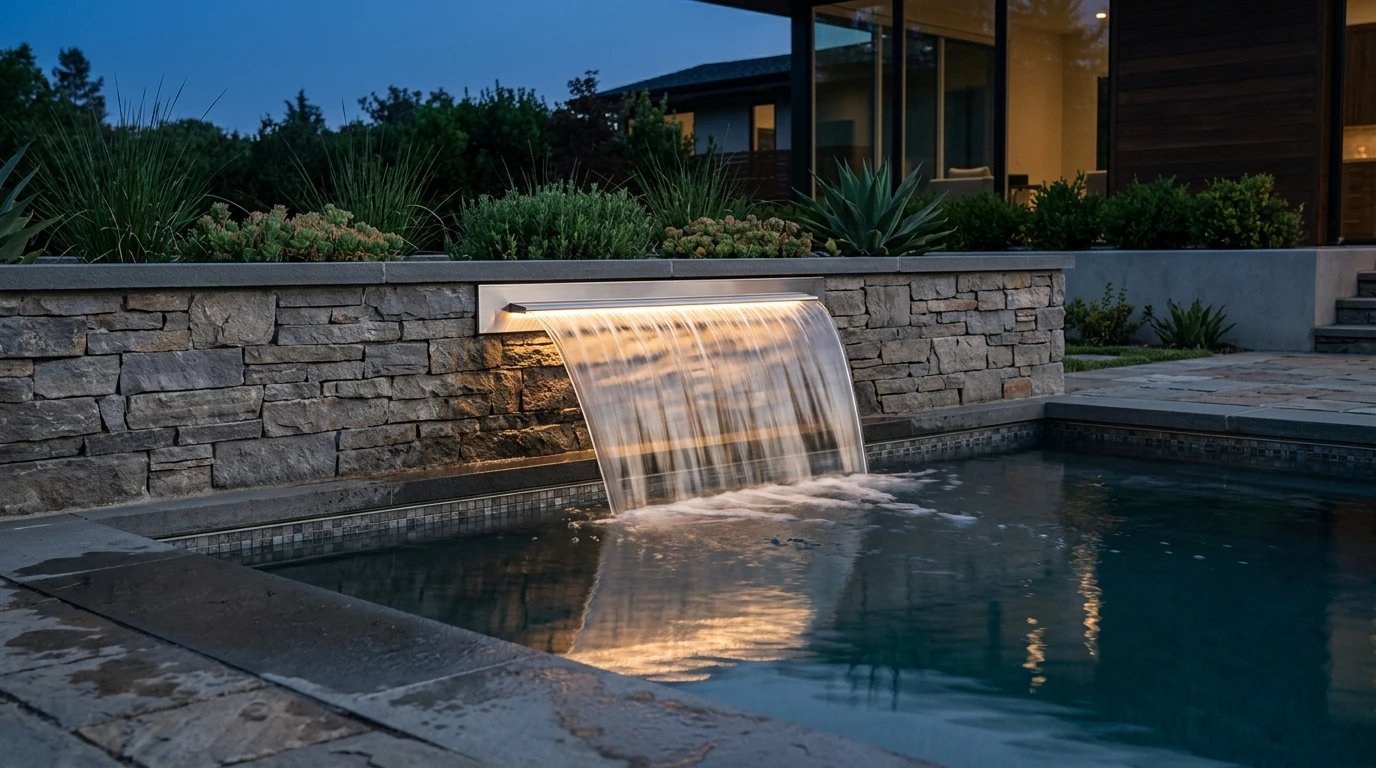
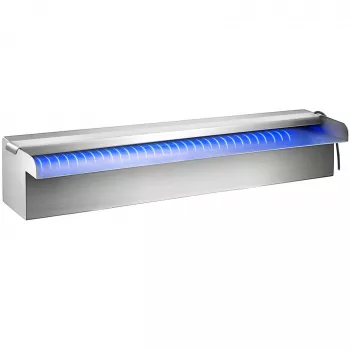
LED Pool Fountain Waterfall Spillway for Outdoor Garden, Stainless Steel Water Feature
A stainless steel spillway with integrated lighting can turn a plain wall or basin edge into a crisp “sheet of water” by day and a soft, glowing focal point after dark. Whether it’s installed on a pool feature wall, a pondless reservoir, or a modern courtyard basin, an LED waterfall spillway adds movement, sound, and a clean architectural line. Below is a practical guide to what to expect, where it looks best, how to plan plumbing and power, and how to keep the flow looking smooth season after season.
What a stainless steel LED spillway changes in an outdoor space
The signature effect of a spillway is the water curtain: a uniform sheet that reads as sleek and modern. When the LEDs are on, the water becomes the “shade” the light is painted onto, so the feature stays visible even when the rest of the yard is dark.
Beyond looks, a spillway adds a steady, calming sound that can help soften nearby traffic or neighbor noise without the aggressive hiss that some aerating fountains create. It also improves surface movement in decorative basins and reservoirs, helping reduce stagnant-looking zones (while still relying on proper filtration and circulation for water quality).
Design-wise, stainless steel pairs naturally with contemporary hardscapes—tile waterlines, stone coping, poured concrete, and raised planters. The key is matching the spillway width to the wall scale and choosing a pump that can deliver stable flow for the “sheet” look you want.
At-a-glance checklist before buying
Before choosing a spillway, confirm (1) where it will mount, (2) how water will be supplied, and (3) how the LED power will be routed safely. A little planning upfront prevents the most common issues: uneven sheets, splashy landings, and hard-to-access lips that collect scale.
Planning guide for a smooth waterfall sheet
| Decision point | What to aim for | Why it matters |
|---|---|---|
| Spillway width | Match feature wall scale and basin size | Wider spillways need more flow to keep an even sheet |
| Pump flow stability | Consistent flow, minimal surging | Pulsing flow breaks the sheet and causes splash |
| Mounting level | Perfectly level left-to-right | A slight tilt makes the water favor one side |
| Setback from basin edge | Enough clearance for the water to land cleanly | Too close can cause back-splash onto the wall |
| LED placement and glare | Aim light through the water, not at seating | Reduces glare while making the water sheet pop |
Material and finish: why stainless steel is popular for spillways
Stainless steel is popular for water features because it typically resists rust better than many coated metals in humid outdoor conditions—especially when splashed regularly. Performance still depends on the stainless grade, local water chemistry, and how often the surface is rinsed or cleaned. For general background on stainless properties and corrosion resistance, the Nickel Institute’s stainless steel guidance is a helpful reference.
Placement ideas that look intentional (not tacked on)
Installation overview: plumbing, leveling, and power
- Water supply: A dedicated line from a pump is the easiest way to tune the feature without affecting overall circulation. If tying into an existing pool return, plan on valves and balancing so the waterfall doesn’t starve other returns.
- Valving: Add a ball valve or gate valve to dial the sheet thickness and to reduce splash during windy weather.
- Leveling: Dry-fit, shim, and verify level before final fastening. Even a slight tilt will make water favor one side.
- Sealing: Use appropriate gaskets/sealant at wall penetrations to protect the structure from slow leaks.
- LED power: Route cables through protected conduit where possible, keep connections dry, and follow local code requirements for wet locations. For general LED efficiency and longevity context, see the U.S. Department of Energy’s LED lighting overview.
- Commissioning: Start at lower flow, increase gradually, and fine-tune until the sheet is even across the full lip.
For plumbing adjustments and fittings, having the right tool on hand can save time—an 18″ Aluminum Pipe Wrench is a practical option for tightening threaded connections during setup.
Care and seasonal upkeep
For pool owners, keeping water chemistry within recommended ranges also helps protect finishes and equipment; the CDC’s pool chemical safety guidance is a solid reference for safe handling and best practices.
Product spotlight: LED Pool Fountain Waterfall Spillway
If the goal is a modern stainless feature with built-in lighting, the LED Pool Fountain Waterfall Spillway for Outdoor Garden, Stainless Steel Water Feature is designed to deliver that clean, architectural look for pools, garden basins, and decorative ponds. The integrated LEDs highlight the falling water for evening ambiance, and the stainless housing complements stone, tile, and concrete walls.
Quick reference
| Detail | Value |
|---|---|
| Price | 74.67 USD |
| Availability | In stock |
| Material | Stainless steel (housing/spillway body) |
| Lighting | Integrated LED |
| Typical use | Pool edge, raised wall, garden basin, decorative pond |
FAQ
Why is my waterfall sheet uneven or splitting into streams?
The most common causes are a spillway that isn’t perfectly level, inconsistent pump flow, or mineral buildup on the lip. Re-check left-to-right level, stabilize flow with a valve, and clean the spillway edge so water can release evenly.
Can an LED spillway be used with a chlorinated pool or saltwater pool?
Yes, but water chemistry and rinsing matter for long-term finish. Keep chemical levels within recommended ranges, rinse off heavy splash when possible, and clean deposits early—especially in saltwater or coastal conditions.
How much pump flow is needed for a smooth waterfall sheet?
It depends on the spillway width and whether you want a thin glassy sheet or a thicker cascade. A thinner sheet needs steadier, well-tuned flow and a perfectly level mount, while a thicker look is more forgiving; an adjustable valve helps dial it in.








Leave a comment