Pet Hair Cleanup Made Easy: Cordless Stick Vacuum + LED
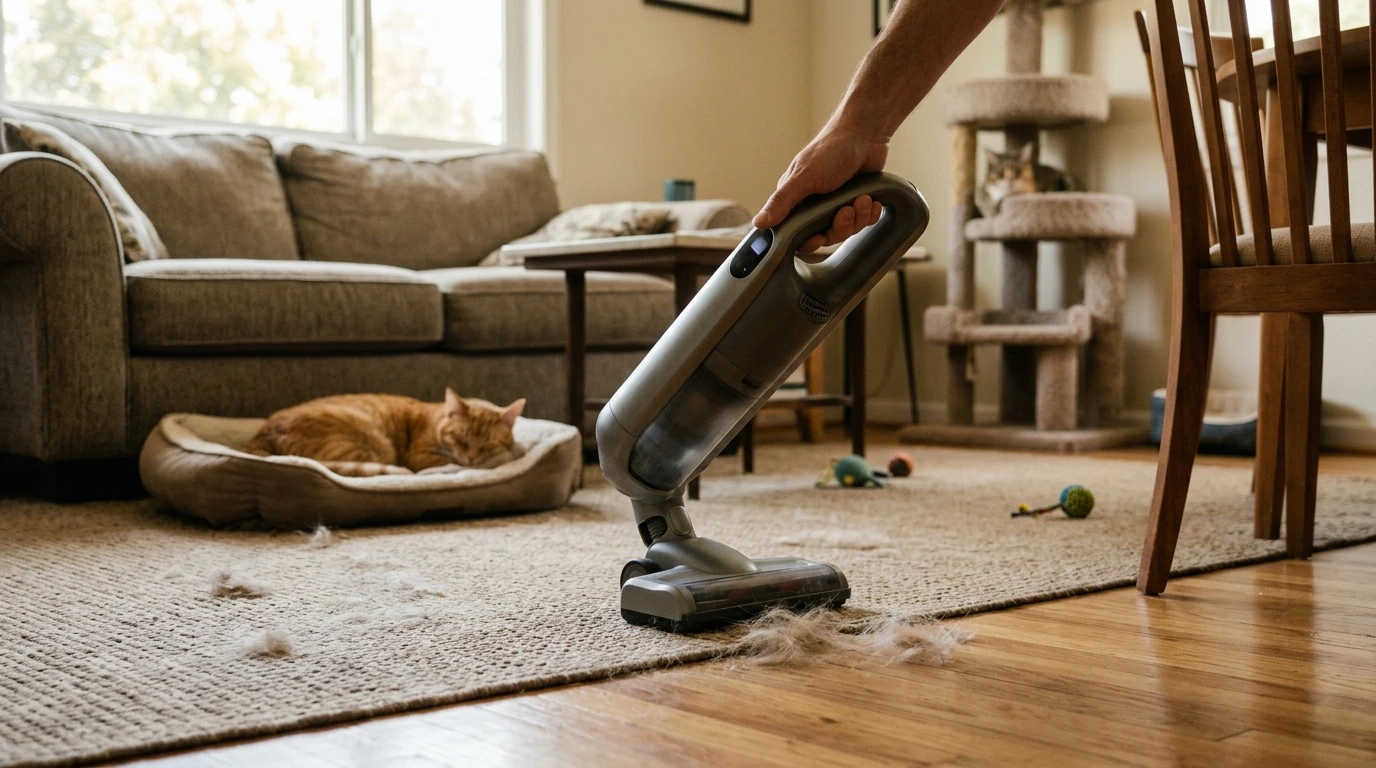
Powerful Cordless Stick Vacuum Cleaner with LED Display for Pet Hair
Pet hair builds up fast on floors, rugs, and upholstery—especially in high-traffic areas and near feeding spots. A cordless stick vacuum with strong suction and an on-handle LED display helps keep daily cleanups quick, targeted, and less disruptive, with clear feedback on power level and battery status while moving room to room.
What Makes This Vacuum a Good Fit for Pet Homes
Pet households usually need a vacuum that’s ready for frequent, short sessions—not just a weekly deep clean. A cordless stick vacuum is built for exactly that rhythm, especially when fur collects in predictable zones like the couch corner, by the cat tree, and under the dining table.
- Cordless design supports fast “spot cleans” around litter boxes, entryways, couches, and under dining tables without managing a power cord.
- Strong suction helps lift embedded fur and dander from rugs while still being nimble on hard floors.
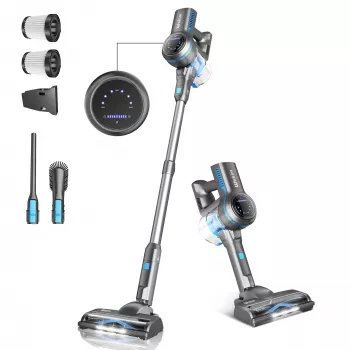
- LED display keeps key info visible during cleaning (battery level, mode status), reducing guesswork mid-session.
- Stick format reaches under furniture and along baseboards where tumble-fur collects.
- Lightweight handling makes it easier to clean stairs, car seats, and pet beds more frequently.
If you’re building a simple daily routine, start with the main tool: Powerful Cordless Stick Vacuum Cleaner with LED Display for Pet Hair. For homes with cats, pairing quick vacuum sessions with a dedicated “hangout zone” can also reduce hair spread—especially when cats spend more time scratching and lounging in one place like the 5-Level Cat Tree with Large Hammock, Scratching Posts, and Cozy Condo for Indoor Cats.
LED Display: Useful Readouts and How They Help Day-to-Day
An LED display sounds like a small feature until it prevents the most common pet-hair cleaning frustration: running out of battery halfway through the “worst” room. With quick, repeatable routines, seeing charge level and mode status at a glance keeps the cleanup moving.
- Battery indicator: plan quick passes for the most hair-prone zones before running low.
- Mode/suction level: switch up power for rugs, down for hard floors to extend runtime.
- Status prompts (when available): simplifies troubleshooting by signaling charging or operational states.
- Better pacing: short, frequent cleans become easier when remaining power is visible at a glance.
Common LED Display Cues and Practical Actions
| Display cue | What it usually means | What to do next |
|---|---|---|
| High battery / full bars | Plenty of charge remaining | Start with rugs or upholstered areas first |
| Mid battery | Moderate charge | Focus on high-shed zones (sofas, hallways, pet beds) |
| Low battery / few bars | Charge nearly depleted | Finish hard floors and quick edges, then recharge |
| Power mode icon changes | Suction level adjusted | Use higher mode on rugs; lower on hard floors for longer runtime |
Cleaning Pet Hair from Different Surfaces
Pet hair behaves differently depending on surface texture. The best results usually come from matching suction level and pace to how hair clings and compacts.
- Hard floors: use steady, overlapping passes to gather fur along edges; finish with a perimeter sweep near baseboards.
- Low-pile rugs: increase suction for embedded hair; slow down the pass to let airflow lift fibers.
- High-pile rugs: use controlled strokes and avoid forcing the head; hair can wrap more easily in deeper pile.
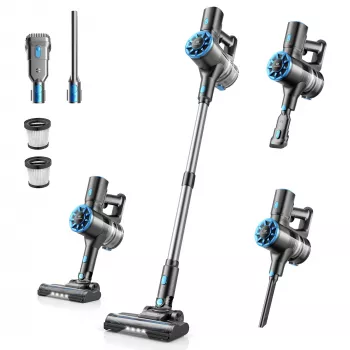
- Upholstery and pet beds: use attachments when included; clean seams and creases where hair compacts.
- Car interiors: start with seats and mats; use narrow tools for seat tracks and corners.
A practical approach is “top-down by room”: quick upholstery pass (where fur is most visible), then the floor perimeter (where fur drifts), and finally the center of the room. This keeps hair from being pushed around as you move.
Keeping Suction Strong: Filters, Dust Cup, and Airflow
Simple Maintenance Rhythm for Pet Households
| Task | How often (typical) | Why it matters |
|---|---|---|
| Empty dust cup | Every 1–3 uses | Maintains airflow and suction consistency |
| Check/clean filter | Weekly (or more during shedding) | Reduces clogging that weakens pickup |
| Inspect brush/roller and intake | Weekly | Prevents hair wrap and blockages |
| Wipe seals and bin edges | Monthly | Helps keep suction stable and reduces dust leaks |
For broader home hygiene, it can help to follow established indoor air and cleaning guidance from trusted public health sources like the U.S. Environmental Protection Agency and the American Lung Association, especially in homes where allergy sensitivity is a concern.
Battery and Charging Habits That Extend Runtime
Reducing Pet Hair at the Source: Quick Home Setup Tips
When cleaning includes fabrics (blankets, throws, removable covers), using straightforward cleaning and disinfecting best practices from the CDC can help guide a consistent routine—especially during messy seasons.
Product Snapshot and Where It Fits in a Pet-Care Routine
At-a-Glance Details
| Item | Details |
|---|---|
| Product | Powerful Cordless Stick Vacuum Cleaner with LED Display for Pet Hair |
| Price | $80.51 USD |
| Availability | In stock |
| Best for | Daily pet hair pickup on floors, rugs, and upholstery |
FAQ
Will a cordless stick vacuum pick up pet hair from carpets and rugs?
Yes—strong suction and the right setting can lift a lot of embedded hair from rugs and carpets. Use higher power on rugs and slow your passes so airflow has time to pull hair up from the fibers.
How often should the filter be cleaned in a home with shedding pets?
Check the filter weekly, and clean it more often during heavy shedding seasons or if you notice a drop in suction. A clogged filter restricts airflow, reduces pickup, and can contribute to overheating during longer sessions.
What does the LED display help with during cleaning?
It helps you track battery level and mode status so you can prioritize the hair-prone areas first and avoid interruptions. With visible power feedback, it’s easier to decide when to switch suction levels or pause to recharge.







Leave a comment