24-Inch Manual Tile Cutter: Clean Cuts on Ceramic & Porcelain
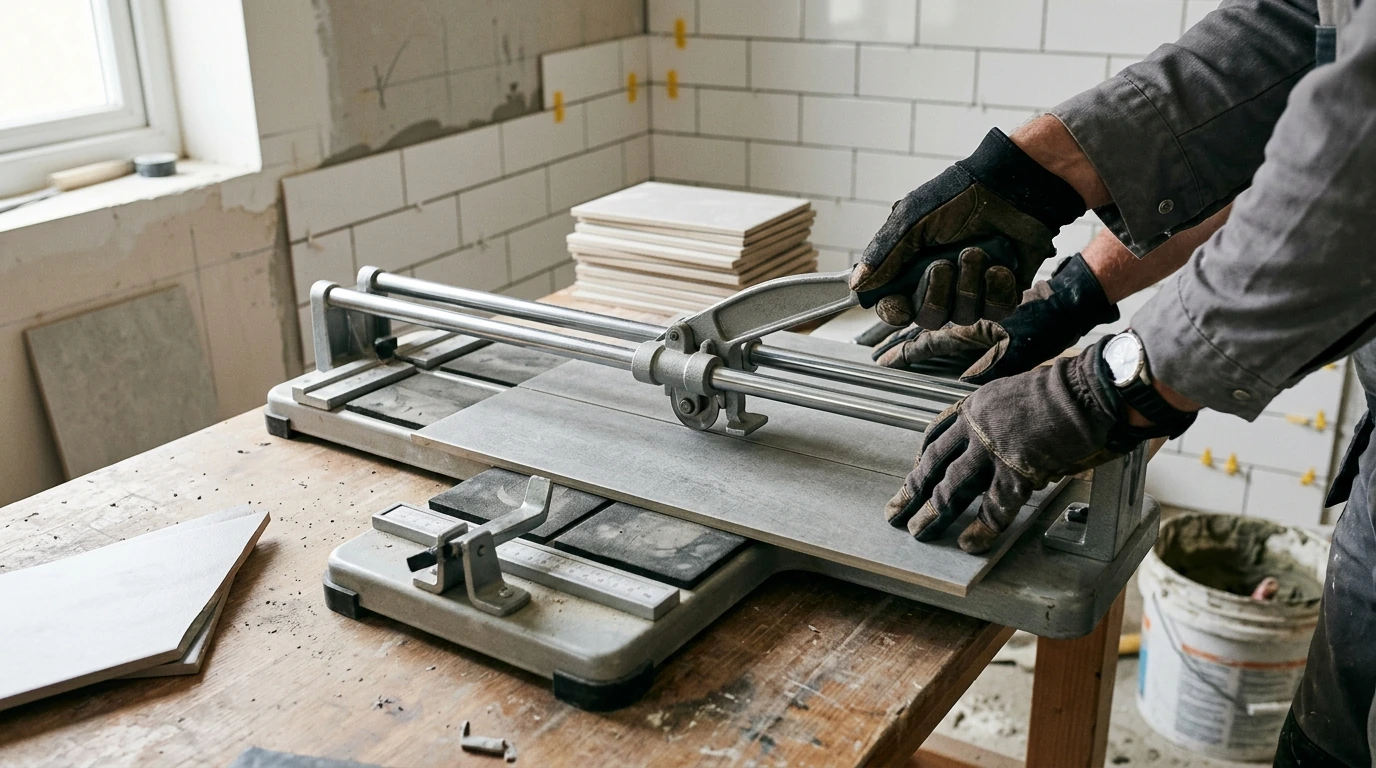
24-Inch Manual Tile Cutter for Clean, Accurate Cuts on Ceramic and Porcelain
A dependable manual tile cutter keeps tile work moving—especially when the job is full of straight rip cuts and repeated trims. A 24-inch manual tile cutter is a practical size for many remodels because it handles popular rectangular formats while staying portable and quiet compared to a wet saw. Below is a clear look at what this cutter size is best for, what features influence cut quality, and how to score and snap ceramic or porcelain with fewer chips.
What a 24-inch manual tile cutter is best suited for
A 24-inch cutter is built for speed and consistency on straight cuts. It’s a strong fit for floor and wall projects where the layout includes repeated edge trims, doorway transitions, or long rip cuts that would otherwise require constant wet saw setup.
- Straight cuts on common floor and wall tile sizes, including longer formats up to the cutter’s rated capacity
- Fast repeat cuts for large rooms where a wet saw would slow down setup and cleanup
- Ceramic and many porcelain tiles when the scoring wheel is sharp and pressure is controlled
- Projects that benefit from low dust and quiet operation compared with grinders and snap-less methods
- Situations where portability matters: moving room-to-room or working in finished spaces
Manual cutters shine when the majority of cuts are straight and the goal is clean edges that tuck under baseboards, trim, or fixtures. For curved cuts, notches, and holes, plan on a secondary tool.
Key features that affect cut accuracy and edge quality
Two cutters with the same “24-inch” label can perform very differently. Accuracy depends on how stable the cutter stays while scoring and how predictably it snaps along the score line.
- Rigid base and rails: Less flex helps the score track straight across the full tile width.
- Scoring wheel material and size: Harder, sharper wheels typically score porcelain more cleanly, reducing surface chipping.
- Breaking mechanism leverage: Smooth, even snap force helps avoid micro-fractures that show up as ragged edges.
- Fence and angle guides: A stable, square fence prevents gradual drift—especially noticeable on repeated cuts.
- Measurement scale readability: Clear markings speed up production cuts and make narrow rips less fussy.
If you’re installing to industry-referenced practices, the Tile Council of North America (TCNA) and related ANSI standards provide useful overviews for overall installation quality. While they don’t “approve” a specific cutter, they reinforce the value of consistent workmanship and proper planning.
How to score and snap tile with fewer chips
Clean manual cuts are more about technique than brute force. The goal is a single crisp score and a controlled snap—without crushing the glaze or wandering off line.
Choosing the right cutter size and capacity for the tile on hand
Manual cutter fit guide by tile type and common cut needs
| Tile material / finish | Best use cases | Technique tips | When to use a different tool |
|---|---|---|---|
| Ceramic (glazed) | Fast straight cuts, repetitive trims | Single pass score; moderate pressure; snap decisively | Use nippers or grinder for notches and curves |
| Porcelain (standard) | Straight cuts and moderate volume installs | Use a sharp wheel; steady pressure; keep tile tight to fence | Use wet saw for very hard or thick porcelain, or for polished edges |
| Porcelain (dense/large format) | Straight cuts when cutter is rated and rigid | Ensure full support; avoid re-scoring; check rail alignment frequently | Wet saw recommended for thick tiles, ultra-hard bodies, or mitered edges |
| Textured / matte finishes | Straight cuts where the wheel can track cleanly | Verify wheel stays in the groove; maintain even pressure | Grinder/wet saw for deep textures that cause wheel wandering |
Maintenance and setup checks that keep cuts consistent
Safety and workflow tips for cleaner installs
Product spotlight: 24-Inch Manual Tile Cutter
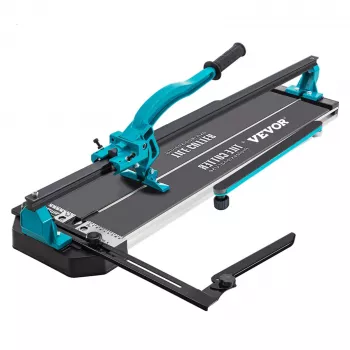
If your work includes frequent straight cuts on ceramic and porcelain, the 24-Inch Manual Tile Cutter – Precision Cutting for Ceramic & Porcelain Tiles is a straightforward option for speed and portability. It’s well-suited for remodels, backsplashes, bathrooms, and flooring where you want accurate scoring and snapping without the mess of a wet saw. Current listed price is $108.17 (subject to change), and it’s listed as in stock.
For broader jobsite readiness—especially when tile work overlaps with plumbing adjustments—an 18″ Aluminum Pipe Wrench can be a useful companion tool for tightening supply lines or making small fixture-related changes while you’re already on-site.
FAQ
Can a manual tile cutter cut porcelain tile cleanly?
Yes—many porcelain tiles cut cleanly when the cutter is rigid, the scoring wheel is sharp, and the score is a single continuous pass. Very dense or thick porcelain may still produce better results on a wet saw.
Why does tile chip when snapping after scoring?
Chipping often comes from re-scoring the same line, using uneven pressure, or snapping off-center from the score. A worn wheel or a tile that isn’t held firmly against the fence can also cause the snap to fracture unpredictably.
What size manual tile cutter is appropriate for a 12×24 tile?
A cutter with at least a 24-inch straight-cut capacity is typically needed for 12×24 tiles. If you’re cutting diagonally, you may need a longer cutter depending on the tool’s diagonal rating and your layout.








Leave a comment