6-Quart Portable Slow Cooker: Defrost + Lid Lock Guide
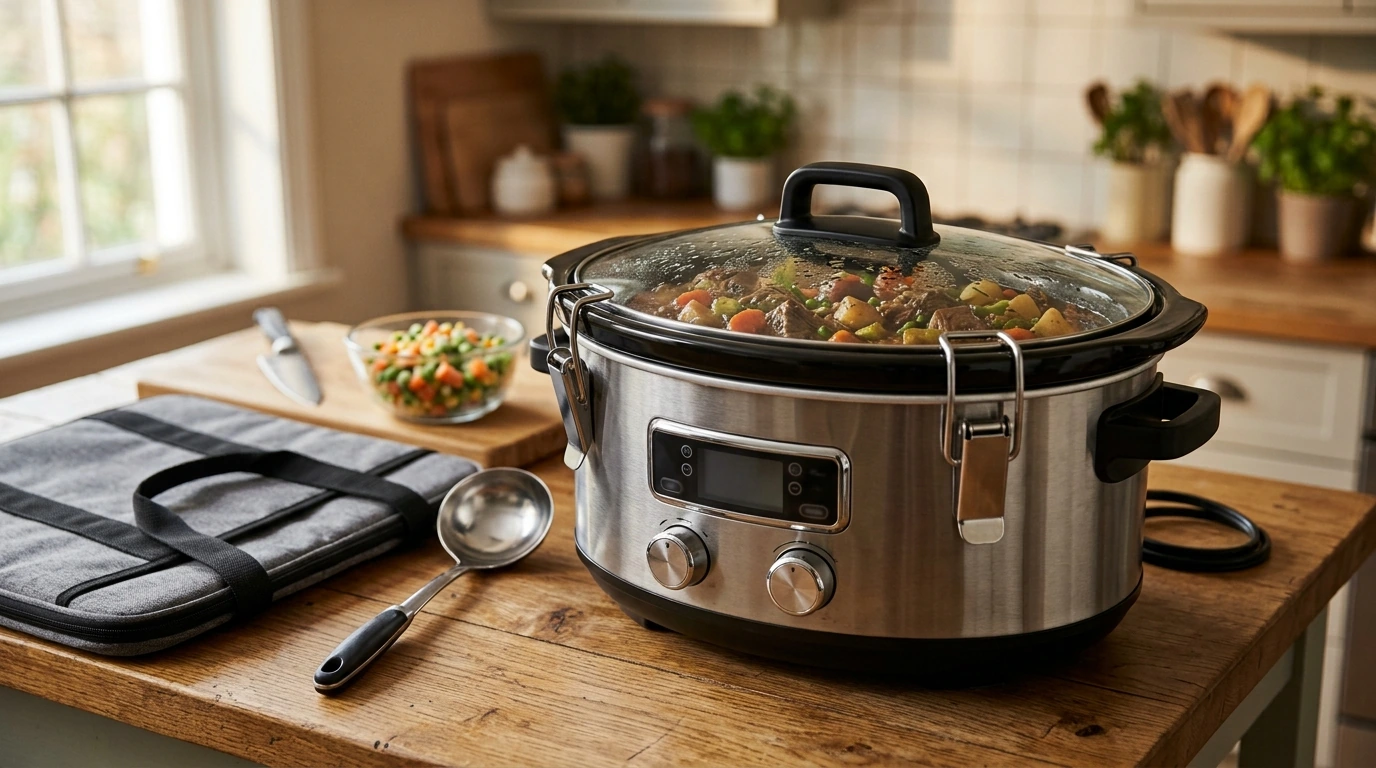
Portable Slow Cooking That’s Ready for Real Life
A portable slow cooker should do more than simmer meals—it should travel cleanly, cook predictably, and handle busy schedules without babysitting. The Portable 6 Quart Programmable Slow Cooker with Defrost Setting and Lid Lock is built around two practical upgrades: a defrost setting that helps you start from frozen when plans change, and a locking lid designed to keep the top seated while you move it from kitchen to car to buffet table. Below are the day-to-day details that matter: what makes it travel-friendly, how to use defrost safely, what to cook in a 6-quart capacity, and how to get consistent results for potlucks, family dinners, and weekly meal prep.
What Makes This Slow Cooker Travel-Friendly
- 6-quart capacity: Big enough for family meals, batch cooking, and gatherings, so you’re not juggling multiple pots.
- Lid lock for transport: Helps keep the lid seated to reduce sloshing and leaks when you carry it or set it in the car.
- Programmable controls: Supports hands-off cooking and more predictable finish times for busy schedules.
- One-pot cooking: Less cleanup than stovetop braises and fewer dishes to haul to an event.
For anyone who regularly brings food to the office, a family get-together, or a tailgate, the combination of a roomy insert and a secured lid is the difference between arriving with a ready-to-serve dish and arriving with a mess to clean up.
Defrost Setting: When to Use It and When Not to
The defrost setting is best thought of as a gentle start that helps move ingredients from frozen toward cook-ready—followed immediately by a full cooking cycle. It’s not meant to “park” food at low temperatures for extended periods.
- Use defrost when time is tight: Especially for frozen vegetables, pre-portioned meats, or freezer-prepped soup kits.
- Choose recipes with enough liquid: Brothy soups, saucy chilis, and stews help distribute heat more evenly.
- Avoid long holds: Don’t let ingredients linger in the temperature “danger zone” where bacteria can grow.
- Be cautious with large, dense frozen roasts: Refrigerator thawing is often the safer, more even path before slow cooking.
Defrost vs. Cook vs. Keep Warm: Practical Differences
| Mode | Typical purpose | Best for | Avoid when |
|---|---|---|---|
| Defrost | Gentle start for frozen ingredients | Frozen portions, soups/stews that quickly heat through | Leaving food for extended periods before fully cooking |
| Cook (Low/High) | Bring dish to full doneness | Roasts, chili, pulled meats, beans (properly prepped) | Overfilling pot or cooking without enough liquid where needed |
| Keep Warm | Maintain serving temperature after cooking | Potlucks, buffet service, short holding | All-day holding or using it to “cook” raw ingredients |
Programmable Controls That Support Real Schedules
- Set-and-forget timing: Helps line up dinner with commutes, school pickups, or an event start time.
- Less overcooking: A predictable timer matters for lean meats and recipes where texture changes quickly near the end.
- Plan for carryover heat: Many dishes continue to soften briefly after the cycle ends, especially pasta-free stews and braises.
- Finish close to serving: For gatherings, aim to transition into Keep Warm near arrival time, not hours before.
A good rule for potlucks is to have cooking complete shortly before you leave, then let the cooker hold at serving temperature during the event. For weekday dinners, the programmable finish time reduces the “it cooked too long” problem that can dry out chicken breast or make vegetables overly soft.
What to Cook in a 6-Quart Portable Slow Cooker
- Crowd-friendly mains: Shredded chicken, pulled pork, meatballs in sauce, taco fillings, chili, and hearty stews.
- Meal-prep staples: Salsa chicken, lentil soup, beef and barley, and braised short ribs (space permitting).
- Travel-ready sides: Queso dip, mulled cider, mashed potatoes (with enough moisture), and baked beans.
- Desserts: Bread pudding and fruit cobblers—just watch moisture levels to prevent scorching at the edges.
If you’re building a small “bring-it-anywhere” kitchen setup, pairing a slow cooker with a compact prep appliance can help. The Compact 400W Mini Juicer with 16oz Cup – Easy & Efficient Fruit Juice Extractor is a handy complement for quick citrus, fresh apple juice, or ginger blends that can become marinades, sauces, and mocktail mixers for gatherings.
Portability Tips: Clean Transport and Stress-Free Serving
Food Safety Basics for Slow Cooking (Especially with Defrost)
For deeper guidance, consult the USDA Food Safety and Inspection Service guidance on slow cookers and hot/cold holding recommendations in the FDA Food Code.
Care and Maintenance for Long-Term Reliability
Quick Checks Before Buying: Fit, Capacity, and Use Cases
FAQ
Can frozen meat go directly into a slow cooker using the defrost setting?
It can be acceptable for small, thin, or pre-portioned pieces with enough liquid to heat quickly, but large frozen cuts are riskier because they can warm too slowly in the center. For best safety, move from defrost directly into a full cook cycle and confirm the protein reaches a safe internal temperature promptly.
How full should a 6-quart slow cooker be for best results?
Aim for roughly half to about two-thirds full for the most consistent heating. Overfilling can reduce heat circulation and extend cooking time, while cooking with very little in the pot can lead to scorching around the edges depending on the recipe.
Does a lid lock make it spill-proof during transport?
No—lid locks help keep the lid secured, but they don’t guarantee zero spills. Let food settle briefly before moving, keep the cooker level, avoid overfilling, and transport it on a stable, flat surface.







Leave a comment