Multi-Level Cat Tree Playhouse: Stability, Setup, Tips
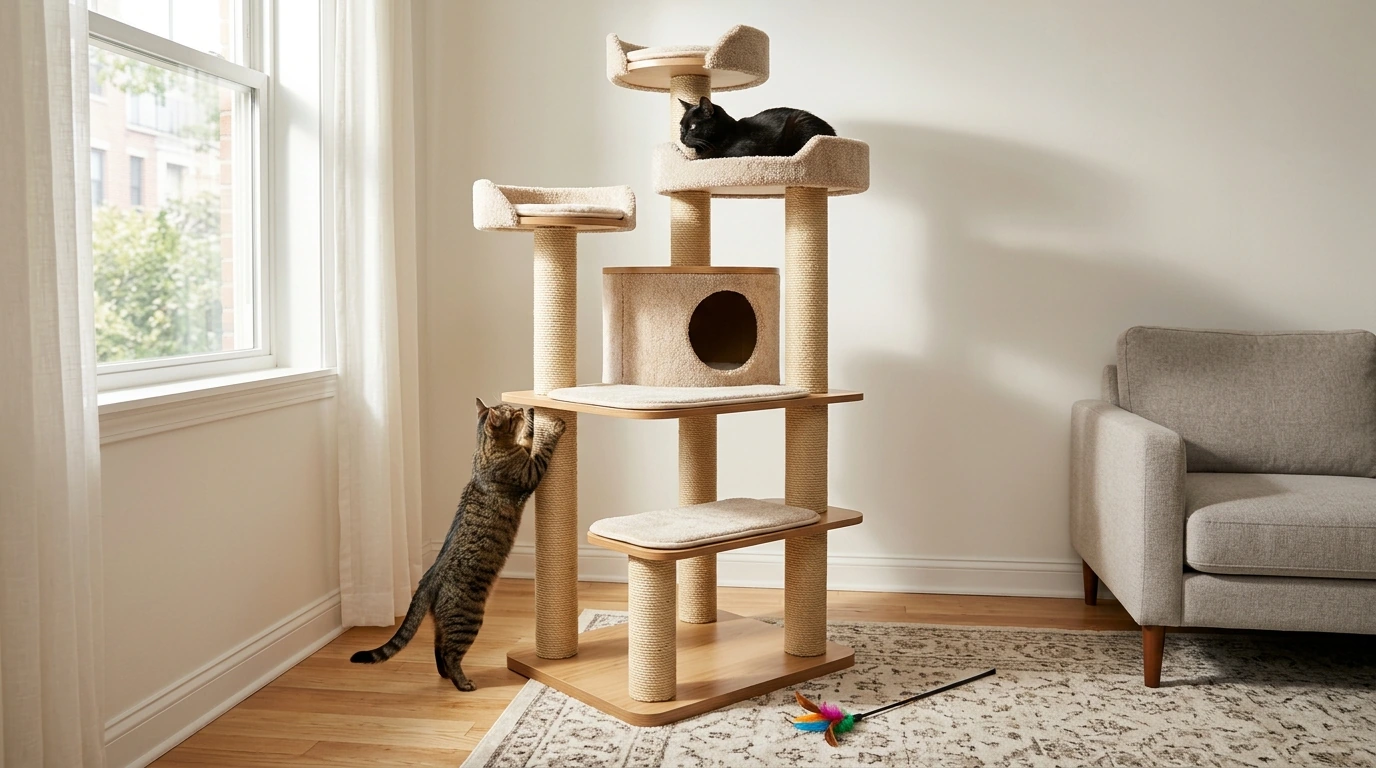
Large Multi-Level Cat Tree Playhouse: Vertical Fun, Rest, and Scratching in One Tower
A multi-level cat tree playhouse combines climbing routes, lounging spots, and scratch-friendly surfaces to support daily exercise and relaxation indoors. When the tower is stable, well-placed, and easy to use, it becomes the “default hangout” that helps cats burn energy, nap more peacefully, and scratch where you want them to.
Animal behavior resources consistently emphasize the value of environmental enrichment and vertical territory for indoor cats. For deeper guidance on creating a cat-friendly home, see the American Association of Feline Practitioners (AAFP) and practical enrichment tips from the ASPCA.
What a multi-level cat tree playhouse adds to daily life
- Creates vertical territory that can reduce crowding and tension in multi-cat homes by giving each cat a perch or retreat.
- Encourages natural behaviors: climbing, perching, scratching, and hiding—without relying on shelves or furniture edges.
- Offers rest zones at different heights so cats can choose warmth, airflow, and privacy depending on the time of day.
- Helps redirect scratching away from furniture when posts are placed along the “main routes” cats already travel.
- Supports play bursts throughout the day by turning one corner of the room into a climb-and-pounce circuit.
Key features to prioritize before choosing a tower
- Stability first: a wide base, solid joints, and a height that fits the room without wobble. If it shakes, many cats simply won’t trust it.
- Scratch zones on the pathways: posts should be easy to reach while moving between levels—especially near the base and on “turns” between platforms.
- Rest variety: at least one enclosed condo for privacy plus open platforms for perching, stretching, and social lounging.
- Soft, cleanable surfaces: plush is cozy, but it should tolerate vacuuming and quick spot cleaning without matting or shedding excessively.
- Cat-fit sizing: platforms large enough for turning around comfortably, and openings that don’t pinch broad-shouldered cats.
- Traffic flow: multiple ways up and down reduce “dead ends,” helping hesitant cats avoid face-to-face bottlenecks.
- Placement-friendly footprint: especially for apartments, a corner-friendly base with real vertical height can add territory without consuming the whole room.
Spotlight: Large Multi-Level Cat Tree Playhouse
The Large Multi-Level Cat Tree Playhouse is built for cats that want a true vertical routine—climb, pause, observe, scratch, then retreat for a nap. Multiple tiers create a natural “route,” which helps cats use the tower more often because it feels like part of their normal room-to-room movement.
- Designed for vertical exploration with multiple tiers supporting climbing, resting, and observation.
- Works well as a primary activity hub near a window or in a family room where cats already spend time.
- A good match for one central cat zone that combines play sessions, scratch routines, and naps in one footprint.
- Plan around ceiling height and nearby furniture: cats may use adjacent surfaces as launch points, so keep the tower close enough for convenience—but not so close it becomes a shaky bridge.
Quick comparison of in-stock cat towers
| Model | Best for | Standout comfort spaces | Scratch support | Room fit |
|---|---|---|---|---|
| Large Multi-Level Cat Tree Playhouse | Single-tower activity center and vertical territory | Multi-tier lounging and hideaway-style playhouse feel | Posts/areas positioned along climbing routes | Great for corners or window-adjacent placement if floor space allows |
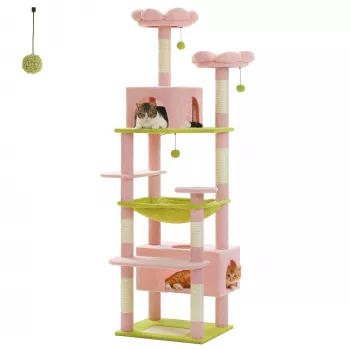
| 5-Level Cat Tree with Large Hammock, Scratching Posts, and Cozy Condo for Indoor Cats | Balanced mix of hammock lounging and climbing | Large hammock + enclosed condo | Multiple scratching posts integrated across levels | Compact-friendly option for many living rooms/bedrooms |
Best placement for more use and fewer messes
- Place it where your cat already hangs out: near a window, by the couch corner, or at the edge of a main walkway (not in the middle of it).
- Leave a comfortable jump gap to nearby furniture for confident cats, but avoid positioning it so close that it becomes a wobble-prone bridge.
- Avoid bump zones: don’t block doors, heat vents, or narrow corridors where people brush past and the tower gets jostled.
- Use a washable mat underneath to catch shed fur and litter-tracked grit, especially if the tower sits near the path from the litter box.
- For multi-cat homes, aim for two approach paths so one cat can leave without being cornered. A corner is fine if there’s space on both sides for entry/exit.
Training and enrichment ideas to make it the favorite spot
Care, cleaning, and long-term durability checks
FAQ
How tall should a multi-level cat tree playhouse be?
Choose a height that fits your ceiling and gives your cat meaningful vertical territory without wobbling. Taller isn’t better if the base and joints can’t keep it steady, and seniors often do best with intermediate “steps” between levels.
Is a multi-level cat tree safe for kittens or older cats?
Yes—when it has a stable base, grippy surfaces, and reasonable hop distances between platforms. Start kittens and cautious seniors at lower levels, supervise early exploration, and prioritize wider platforms and easy routes for older cats.
Where should a cat tree be placed for the most use?
Place it near a window or in a social area where your cat already spends time, and avoid locations that get bumped in high traffic. In multi-cat homes, a spot with more than one approach path helps reduce tension, and a mat underneath makes cleanup easier.








Leave a comment