2-Speed Electric Meat Grinder for Smooth Baby Food Purées
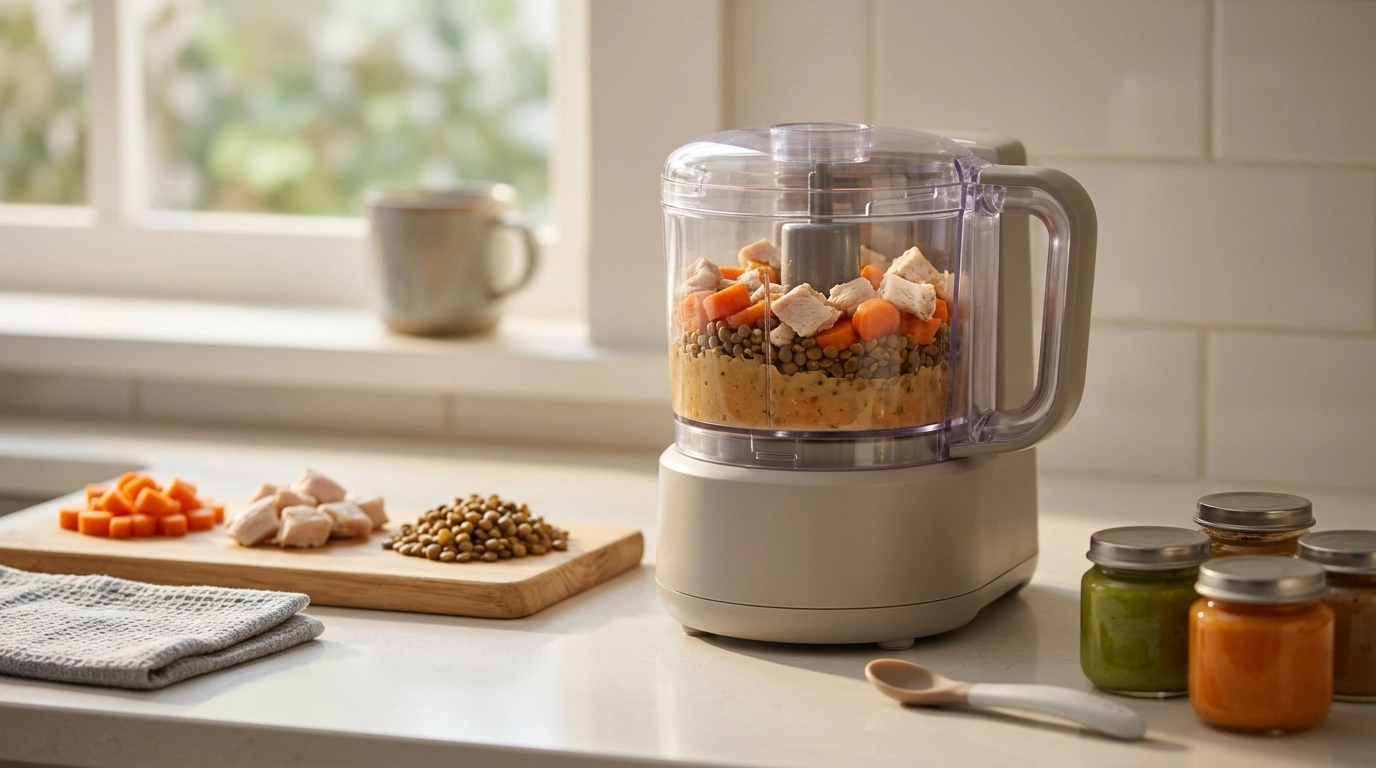
Electric Meat Grinder with Stainless Steel Blades & 2 Speeds for Baby Food: What It Does and How to Use It Safely
A compact electric grinder can speed up baby-food prep by turning cooked meats, vegetables, and legumes into smooth, spoon-ready textures. Stainless steel blades and a two-speed motor make it easier to move from a coarse chop to a more uniform purée without fighting stringy meats or uneven chunks. Below is a practical guide to what these features do in everyday use, how to match textures to different feeding stages, and how to handle ingredients and cleanup safely.
Why stainless steel blades matter for baby food textures
When you’re grinding cooked proteins for a baby, blade performance affects both texture and how easy it is to keep the tool fresh-smelling and sanitary. Stainless steel resists rust and pitting, which helps the cutting edge stay consistent over time and reduces the chance of off-odors that can develop when corrosion forms on metal surfaces.
A sharp blade cuts more cleanly, producing a finer, more even mash or purée. This matters most for meats: if the blade struggles, meat fibers can turn stringy instead of breaking down into a smooth blend. Stainless components are also typically easier to sanitize thoroughly after processing proteins, especially when you disassemble and wash right away.
Even with quality blades, ingredient prep is still the difference-maker. Cook meats until very tender, trim gristle, and remove any tough connective tissue; a grinder will have a hard time turning chewy pieces into a safe, smooth texture.
How two speeds help you control consistency
Two speeds give more control than a single “on/off” grind. A lower speed is useful for starting a batch, gently breaking down soft foods, and reducing splatter when you add liquids like broth, water, or small amounts of breast milk or formula (follow your pediatric guidance). Once pieces are broken down, a higher speed helps refine the mixture into a more uniform purée.
Many parents find that pulse-style use (short bursts) prevents over-processing that can make some foods gummy (potatoes are a common example). If the mixture stalls, stop the motor and redistribute the contents. Add small amounts of liquid rather than forcing the motor to push through a dry, dense mass, which can overheat the unit and leave stubborn lumps.
Speed and texture guide for common baby-food ingredients
| Ingredient | Prep before grinding | Suggested speed approach | Texture target |
|---|---|---|---|
| Chicken or turkey | Cook until very tender; remove bones/skin; cut into small pieces; keep some cooking liquid | Start low to break down, finish high with added liquid | Smooth purée (early) or thicker mash (later) |
| Beef | Slow-cook or braise until shreddable; trim gristle; cut small | Low then high; add broth gradually | Very smooth purée to avoid stringiness |
| Lentils/beans | Cook until soft; drain and reserve cooking water | Low to combine, high to smooth | Creamy purée |
| Carrots/squash | Steam/roast until soft; cube | Low for initial chop, high for silkier finish | Smooth or slightly textured purée |
| Apple/pear | Cook until soft for younger babies; peel if needed | Low then brief high | Smooth fruit purée |
| Oats/rice (cooked) | Cook very soft; loosen with liquid | Low only or brief high | Thin porridge-like blend |
What to look for in an electric grinder for baby food
Baby-food prep is usually small-batch and texture-focused, so the best features are the ones that support control and quick cleaning.
Simple workflow for smooth, spoon-ready baby food
For feeding readiness and age-appropriate textures, consult your pediatric guidance and reputable references like the American Academy of Pediatrics.
Cleaning and food-safety basics for baby prep
- Sanitize your prep zone: Wash hands and sanitize surfaces before and after handling raw meat, poultry, seafood, and eggs.
- Clean immediately after grinding: Rinse and wash removable parts right away; dried residue is harder to remove and can trap odors.
- Use hot, soapy water: A small brush helps clean around blades and tight corners. Let parts dry completely before reassembly.
- Store safely: Cool purées quickly, refrigerate promptly, and reheat only what will be served. For more details, see the CDC guidance on food safety for young children.
- Cook to safe temperatures: When in doubt, use a thermometer and follow the USDA safe minimum internal temperature chart.
Product snapshot: Electric Meat Grinder with Stainless Steel Blades & 2 Speeds
The Electric Meat Grinder with Stainless Steel Blades & 2 Speeds for Baby Food is designed for small-batch grinding and blending when you want smoother textures. Stainless steel blades support consistent chopping and simpler cleanup after proteins, while two speed settings help you transition from a coarse breakdown to a finer purée.
If you’re also prepping fresh juices for the family, the Compact 400W Mini Juicer with 16oz Cup can be a useful companion appliance for quick, single-serve fruit and veggie juice (separate from baby purées and always aligned with your pediatrician’s guidance).
Quick details
| Item | Detail |
|---|---|
| Name | Electric Meat Grinder with Stainless Steel Blades & 2 Speeds for Baby Food |
| Price | 39.51 USD |
| Availability | In stock |
FAQ
Which speed should be used to make baby food smoother?
Start on the lower speed to break down pieces and reduce splatter, then switch to the higher speed to refine the texture. Add liquid gradually and use short bursts so the mixture smooths out without overheating.
Can an electric meat grinder be used for vegetables and fruit purées too?
Yes. Soft cooked vegetables, cooked fruits, and legumes typically blend well, especially when they’re cooked until tender and loosened with a small amount of liquid for a uniform consistency.
How should ground baby food be stored after blending?
Cool it quickly, portion into small containers, and refrigerate promptly for near-term use while freezing extra portions for later. Reheat only what will be served and discard leftovers that have been in contact with the feeding spoon.










Leave a comment