5-Level Cat Tree: Hammock, Condo & Scratch Posts
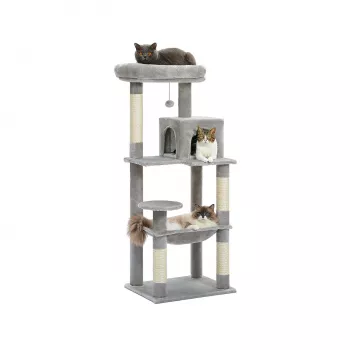
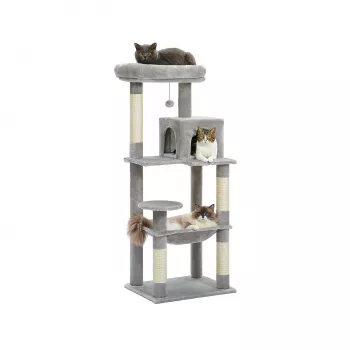
5-Level Cat Tree with Large Hammock, Scratching Posts, and Cozy Condo for Indoor Cats
A multi-level cat tree can turn a small corner into a climbing zone, nap station, and scratch-friendly outlet. This 5-level design pairs vertical play with a roomy hammock, sturdy scratching posts, and a covered condo so indoor cats can perch, retreat, and reset throughout the day.
What a 5-level setup adds to an indoor cat’s routine
Indoor cats thrive when their home offers both movement and “safe” places to observe, hide, and rest. A 5-level cat tree creates that rhythm without needing a big footprint.
- Vertical territory: Higher perches help cats feel secure by providing a vantage point away from busy foot traffic.
- Multiple checkpoints: Several platforms encourage short bursts of movement and hopping that fit naturally into a day.
- Multi-cat separation: One cat can lounge in the hammock while another takes the condo or top perch, reducing friction.
- A predictable flow: Climb → scratch → rest supports healthy daily patterns and can lower boredom-related mischief.
Environmental enrichment matters for stress reduction and wellbeing, and vertical space is a cornerstone of a cat-friendly home. For more context, see the AAFP/ISFM cat-friendly home guidance.
Key features to look for in this style of cat tree
Not all multi-level towers feel the same in real life. The best choice is the one your cat will actually use, day after day.
- Large hammock: Wide, supportive fabric that cradles the body for deeper naps (often a favorite for adult cats who like a “sink-in” rest).
- Cozy condo: An enclosed hideout for decompression and quiet time—especially helpful for shy or easily overstimulated cats.
- Scratching posts: Posts placed along common climb paths so scratching happens naturally while moving between levels.
- Stable base: A broad foundation reduces wobble when cats launch up or hop down.
- Easy-clean surfaces: Materials that vacuum quickly and spot-clean where fur and dander collect.
If scratching is currently landing on furniture, it helps to understand why cats scratch (marking, stretching, claw maintenance). The ASPCA’s scratching overview breaks down the behavior and how to redirect it.
Size, placement, and room planning
Placement often determines whether a cat tree becomes “the spot” or a piece of decor that gets ignored. Aim for convenience, visibility, and safe landings.
- Follow your cat’s traffic: Place it near a living room window, along a hallway route, or close to a favorite nap zone.
- Keep a clear landing zone: Leave space so cats can jump down without clipping furniture corners.
- Choose enrichment over isolation: A window adds natural stimulation; keep cords, blind strings, and fragile items out of reach.
- Small spaces benefit from height: Vertical levels provide exercise while keeping your floor plan open.
- Multi-cat tip: Avoid dead-end placement; give cats two easy ways to exit the area to reduce the chance of one cat “guarding” the tower.
Materials and durability checklist
A cat tree works hardest at the stress points: scratch zones, jump landings, and the hammock’s attachment hardware. A quick durability check now can save frustration later.
- Post covering: Sisal-style wrap typically resists shredding longer than many carpeted surfaces and feels satisfying under claws.
- Platform padding: Look for cushioning that’s comfortable but still supportive so it doesn’t compress into a lumpy surface.
- Attachment points: Hammocks and platforms should be secured with hardware you can re-tighten periodically.
- Edges and seams: Reinforced seams help prevent fraying where cats knead, nest, or hook claws.
- Odor and shedding control: Fabrics that don’t trap odor easily and can be vacuumed without shedding fibers tend to stay nicer longer.
For broader behavior and wellbeing resources, the Cornell Feline Health Center is a solid reference.
Quick comparison: where each feature shines
| Feature | Best for | What to check |
|---|---|---|
| Large hammock | Cats that love deep naps and kneading | Sturdy mounts, supportive fabric, easy vacuuming |
| Cozy condo | Shy cats, new adoptees, multi-cat quiet time | Adequate opening size, breathable interior, stable placement |
| Scratching posts | Redirecting scratching away from furniture | Sisal coverage, good height for full-body stretch, posts positioned along the climb path |
| Multi-level platforms | Climbers and window watchers | Non-slip surface, safe spacing between steps, minimal wobble |
| Wide base | Jumpers and larger adult cats | Solid footprint, hardware that stays tight, even weight distribution |
Helping cats switch from furniture scratching to posts
Assembly and ongoing safety checks
Product picks (in stock)
- 5-Level Cat Tree with Large Hammock, Scratching Posts, and Cozy Condo for Indoor Cats ($48.97) — a vertical footprint that combines climbing, scratching, and an enclosed retreat.
- 18″ Aluminum Pipe Wrench ($37.67) — a handy tool for tightening hardware during assembly and periodic safety checks.
Product highlight: 5-Level Cat Tree with Large Hammock, Scratching Posts, and Cozy Condo
FAQ
Is a 5-level cat tree suitable for kittens and adult cats?
Yes—many households use one cat tree across life stages. Supervise kittens at first, and for adult cats focus on stability, non-slip platforms, and step spacing that feels easy to navigate; placing the tree near a wall can also boost confidence.
How can the hammock be kept clean with heavy shedding?
Vacuum frequently with a brush attachment, then use a lint roller for quick daily touch-ups. Spot-clean as needed, and consider placing a small washable blanket or pad on the hammock (as long as it fits securely) to make cleaning simpler.
Where should a cat tree be placed for the best daily use?
Put it where your cat already spends time—often near a window or in a main living area—and keep a clear landing zone around it. Avoid hazards like cords and blind strings, and in multi-cat homes choose a spot with more than one easy exit route.









Leave a comment