5-Tier Rattan Shoe Cabinet: Calm, Closed Entryway Storage
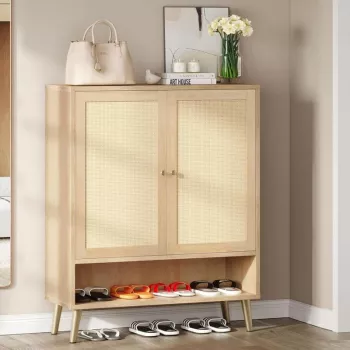
5-Tier Rattan Shoe Cabinet with Doors for a Calmer, Cleaner Entryway
A closed-door shoe cabinet can turn a cluttered drop zone into a tidy entryway while keeping shoes out of sight, reducing visual noise, and helping floors stay easier to clean. This 5-tier rattan-style cabinet is designed to organize daily footwear in a compact footprint and complement warm, natural décor.
What This Shoe Cabinet Does Well
- Creates dedicated, vertical storage so shoes don’t pile up near the door.
- Enclosed doors help keep dust off footwear and make the entryway look neater.
- Rattan-style door fronts add texture and soften the look of functional storage.
- Multi-tier layout supports separation by family member, shoe type, or frequency of use.
- Top surface can serve as a landing zone for keys, mail, and small bags.
When shoes live behind doors instead of in open stacks, it’s easier to keep your walkway clear—an important detail for preventing slips and trips in high-traffic areas. For broader safety guidance, the National Safety Council has practical information on slips, trips, and falls.
Is a 5-Tier Cabinet the Right Size?
- A five-tier layout suits households that rotate between everyday shoes, work pairs, and seasonal options.
- Works well for apartments and narrow entryways where floor space is limited but vertical space is available.
- Helps reduce decision fatigue by keeping the most-used pairs easy to find while less-used shoes stay contained.
- For bulky footwear (boots, high-tops), plan dedicated space on a lower tier or alternate spacing if adjustable.
A helpful way to decide is to map your week: if you regularly switch between sneakers, work shoes, gym shoes, and a weather-ready pair, multi-tier storage prevents the “shoe drift” that ends up blocking the door or getting kicked under a bench.
Design Details That Matter in Daily Use
Doors: cleaner sightlines, less dust
Closed storage instantly makes an entryway feel calmer, and it helps keep dust and pet hair off footwear compared with open racks. For odor control, it’s still smart to store only dry shoes and air out pairs occasionally.
Rattan-style fronts: warmth without fuss
Rattan-inspired texture pairs naturally with light woods, whites, and neutral palettes. It also adds depth, so the cabinet reads more like a décor piece than a purely utilitarian organizer.
Tiered organization: fewer mismatches
With defined levels, shoes are more likely to stay together as pairs. A simple household rule—“put pairs side-by-side before closing the doors”—goes a long way toward avoiding the single-shoe scavenger hunt.
Entryway-ready profile
A compact footprint matters near a front door. A tall, slim cabinet can hold more without becoming the dominant object in the space, leaving room for a mat, a small bench, or a clear walkway.
Quick Setup and Placement Tips
- Place the cabinet where the door swing won’t collide with it and traffic can pass comfortably.
- Leave a little clearance so doors can open fully without scraping adjacent walls or baseboards.
- Use felt pads on hard floors to reduce shifting and protect finishes.
- If the home includes children or pets, consider anchoring the cabinet to reduce tip-over risk.
For tip-over prevention and anchoring best practices, review the U.S. Consumer Product Safety Commission’s Anchor It! guidance. If anchoring is recommended by the manufacturer, follow the included instructions and use appropriate wall hardware for your wall type.
If you’re assembling storage or installing anchors and want a sturdy tool on hand, consider keeping a basic home toolkit option like the 18″ Aluminum Pipe Wrench available for household projects where extra grip and leverage help.
Care, Cleaning, and Odor Control
Styling Ideas for a More Functional Entryway
If you want more inspiration for building an entry routine that sticks, The Spruce has approachable entryway organization ideas that pair well with closed shoe storage.
At-a-Glance Checklist for Choosing and Using It
| Need | Why it matters | Simple tip |
|---|---|---|
| Closed storage | Reduces visual clutter and dust on shoes | Keep frequently used pairs on the most accessible tier |
| Multiple tiers | Separates shoes so pairs stay together | Assign tiers by person or by category (work, casual, gym) |
| Door clearance | Prevents daily frustration and scuffs | Measure swing space and leave side clearance |
| Floor protection | Avoids scratches and shifting | Add felt pads or a thin mat under the cabinet |
| Tip-over prevention | Improves safety in busy areas | Anchor when possible, especially with kids/pets |
Product Option
If you’re ready to simplify the shoe situation near your front door, the 5-Tier Rattan Shoe Cabinet with Doors – Entryway Shoe Storage Organizer is a compact, enclosed organizer designed to keep footwear tidy while adding a natural-texture accent to the entryway.
FAQ
How many shoes can a 5-tier cabinet typically hold?
Capacity varies by shoe size and style, but a practical expectation is a few pairs per tier for everyday shoes like sneakers or flats. Bulkier footwear such as boots usually takes more room, so grouping by type and reserving a lower tier for larger pairs helps maximize usable space.
Does a shoe cabinet with doors help with dust and odors?
Doors help reduce dust and visible clutter because shoes are enclosed rather than exposed to open air and foot traffic. For odors, store only dry shoes, air out pairs periodically, and use a simple deodorizer like charcoal sachets or a breathable baking-soda pouch.
Should a tall shoe cabinet be anchored to the wall?
Anchoring is a smart safety step in busy entryways and in homes with children or pets, since it reduces tip-over risk. Follow the cabinet’s instructions and use the correct wall hardware for your specific wall type.








Leave a comment