5×7 Lacrosse Rebounder Net: Adjustable Pitchback Trainer
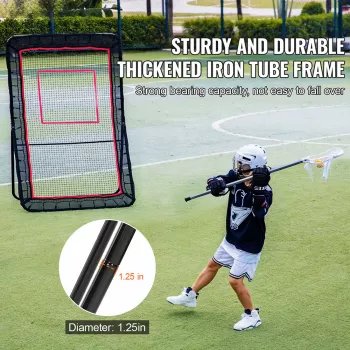
5×7 ft Lacrosse Rebounder Net with Adjustable Pitchback for Multi-Sport Training
A sturdy rebounder can turn a driveway, backyard, or gym corner into a repeatable practice station for passing, catching, ground balls, and reaction work. This 5×7 ft adjustable pitchback is built to send the ball back with pace, so athletes can stack high-rep touches and sharpen mechanics across lacrosse and other sports—without needing a partner.
What This Rebounder Helps Train
A rebounder is simple equipment with a big payoff: it creates consistent, repeatable returns that expose gaps in technique fast. With an adjustable pitchback, you can also change the “problem” the ball presents—clean rebounds, fast ricochets, or short hops—without changing your setup.
- Lacrosse fundamentals: quick-stick passing and catching, off-hand development, and ground ball pickups into immediate outlets.
- Reaction and hand-eye coordination: steeper angles produce more urgent returns that simulate game-speed touches.
- Footwork under pressure: approach angles, split steps, and catch-to-throw transitions without relying on a teammate.
- Multi-sport use cases: soccer first touch and volley work, baseball/softball fielding reps with short-hop returns, and general agility/reflex drills.
- Repetition without downtime: continuous throw–receive–reset cycles build conditioning and clean up form through volume.
Size and Setup: Why 5×7 ft Fits Most Home Training Spaces
The 5×7 ft format hits a practical sweet spot: it’s big enough to feel forgiving during faster reps, but still manageable in most home practice areas. Developing players benefit most from a larger face because fewer off-target throws mean fewer interruptions—and more quality touches per session.
- Broad target area: helps reduce “misses” during high-speed reps, especially when learning new hand positions or off-hand releases.
- Home-friendly footprint: works in driveways, patios, garages, and small yards where a full wall or partner setup isn’t realistic.
- Versatile range: supports close-range technique (quicker hands) and mid-range passing sequences (timing and pace).
- Clearance planning: leave room behind the frame for slight movement and enough space in front to catch safely.
- Surface considerations: place it on stable grass or pavement; add weights/anchors if training with harder throws or in wind.
| Feature | What it means for training |
|---|---|
| 5×7 ft rebounder face | Bigger catchable area for consistent reps and fewer interruptions |
| Adjustable pitchback angle | Switch between flatter returns (passing rhythm) and steep returns (reaction work) |
| Multi-sport compatibility | Supports lacrosse plus touch/fielding drills for other sports |
| Home-practice footprint | Large target without requiring a full field or dedicated training wall |
Adjustable Pitchback Angles: How to Use Them
Angle is the “difficulty dial.” Small changes can turn a smooth rebound into a quick-return reaction rep, so it helps to treat angle work like a progression rather than a one-time adjustment.
- Flatter angles: cleaner, more predictable rebounds—great for form, cadence passing, and building confidence.
- Medium angles: more game-like variability that forces faster hands and tighter catching mechanics.
- Steeper angles: faster returns and short hops that train reaction time, soft hands, and quick resets after the catch.
- Progression idea: begin flatter for accuracy, then increase the angle only after you can string together consistent clean catches.
- Safety note: steep angles can surprise you with speed—start with moderate pace and a shorter distance before you back up.
For lacrosse-specific guidance on skill development and safe participation, USA Lacrosse is a solid reference point: https://www.usalacrosse.com/.
Drill Menu: 15–25 Minute Sessions for Different Goals
Short sessions done often tend to beat occasional marathon workouts. The rebounder makes it easy to build a repeatable routine: a few focused blocks, a little angle change, and you’re done.
- Passing accuracy ladder (10 minutes): pick 3–5 “zones” on the net; alternate dominant/off-hand; count clean catches in a row and try to beat your best.
- Quick-release series (5 minutes): catch and re-throw in one motion; keep hands quiet and shoulders square to reduce wind-up.
- Ground ball to outlet (5 minutes): roll the ball, scoop, step, and throw immediately; repeat from both sides to build symmetry.
- Reaction block (5 minutes): raise the angle; throw with moderate pace; absorb with soft hands and reset quickly.
- Multi-sport add-on (optional 5 minutes): soccer one-touch passes/volleys or baseball short-hop fielding reps at controlled intensity.
Durability, Stability, and Everyday Use Tips
For athletes increasing speed and intensity, it’s also worth reviewing basic head-injury prevention and recognition resources like CDC HEADS UP: https://www.cdc.gov/heads-up/.
Who It’s For
Recommended In-Stock Gear
- 5×7 ft Lacrosse Rebounder Net – Adjustable Pitchback for Multi-Sport Training (In stock)
- 18″ Aluminum Pipe Wrench (In stock) — handy for tightening hardware during setup and periodic checks.
Care, Safety, and Space Planning
FAQ
How far should the rebounder be placed from the athlete?
Beginners often do best starting about 6–10 feet away to control accuracy and learn the rebound rhythm. More advanced players can move back to roughly 12–20 feet for higher-speed returns, as long as there’s enough room to react and catch safely.
Does the adjustable angle change the rebound speed?
Yes—steeper pitchback angles generally create quicker returns and more short hops, while flatter settings tend to be more predictable and easier to handle. Return speed also depends on the ball type and how hard you throw.
Can it be used for sports other than lacrosse?
Yes—common options include soccer one-touch passing and volleys, baseball/softball short-hop fielding reps, and general reaction drills. Use sport-appropriate balls and keep your space clear, since rebound direction can vary on off-center contact.







Leave a comment