Small Sisal Cat Tree: Scratch Post + Play Spot Indoors
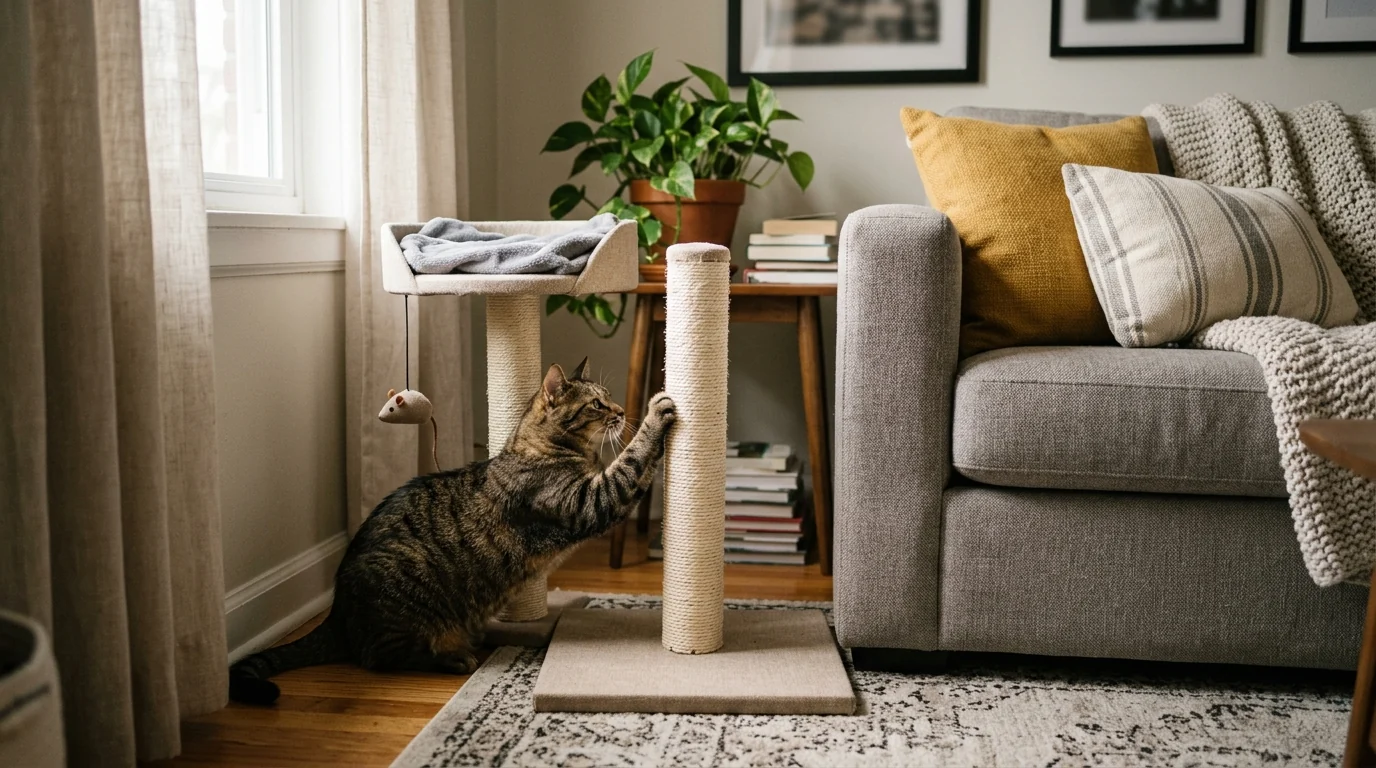
Small Cat Tree with Sisal Scratching Post and Play Area for Indoor Cats
A compact cat tree can add vertical space, a dedicated scratching surface, and a small play zone without taking over the room. The right small indoor cat tree gives your cat a clear “yes” spot for scratching and climbing, while making daily indoor life feel more active and comfortable—especially in apartments or smaller homes.
What this small cat tree adds to an indoor setup
A well-designed small cat tree creates a single, repeatable station for a few core cat needs: scratch, climb, perch, and pause. Because cats tend to repeat behaviors in familiar locations, giving them one attractive “hub” can reduce random scratching on furniture edges and help channel energy into short, healthy bursts.
- Creates a dedicated spot for scratching, climbing, and quick play, helping redirect energy away from furniture.
- Adds vertical territory in small homes where floor space is limited.
- Supports routine behaviors: stretching, claw maintenance, perching, and resting between play sessions.
- Works as a starter climbing piece for kittens, smaller adult cats, or as a second station in another room.
If you want a straightforward, space-friendly option, the Small Cat Tree with Sisal Scratching Post and Play Area for Indoor Cats is an easy way to add structure without committing to a full tower.
Sisal scratching posts: why cats prefer them
Sisal is popular for a reason: many cats find it more satisfying than carpet because it’s firm, textured, and “grippy.” That resistance lets them dig in, pull, and complete the full scratch sequence—often with a long stretch that engages shoulders and back.
- Sisal provides a firm texture cats can hook into, which can feel better than slick carpet or soft fabric.
- Encourages full-body stretching during scratching, supporting natural movement.
- Helps shed old claw sheaths; regular scratching is normal and healthy.
- For best results, place the tree where scratching already happens first (like near a couch corner), then adjust later if needed.
For more detail on why scratching is essential (not “bad behavior”), see the ASPCA guide to scratching behavior.
Play area features that keep indoor cats engaged
A small play area doesn’t need to be elaborate—it just needs to be convenient. When a perch and scratch post are close to where your cat already hangs out, that spot becomes a home base for pouncing, batting, climbing up to observe, and then settling down again.
- Look for a stable base, an elevated perch, and one interactive element (like a small platform or dangling toy).
- Short, frequent play sessions often work better than one long session; a nearby tree supports that routine.
- Rotate stimulation: use wand-toy play near the tree, or occasionally add a small pinch of catnip on the scratch surface (if your cat responds).
- In multi-cat homes, adding a second station in another room can reduce crowding and competition.
Size, stability, and where it fits best
In compact models, stability matters more than height. A wobble that seems minor to a person can be a deal-breaker to a cat—especially a cautious cat or one that has slipped before. Before buying, measure the footprint and also the “jump zone” around it: cats need clearance to hop up, turn around, and hop down comfortably.
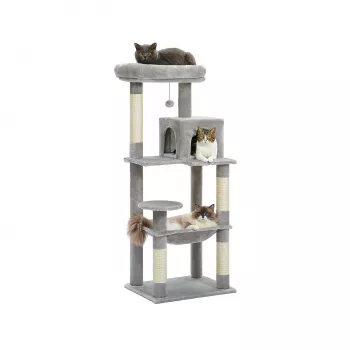
If your home has multiple cats or you’re trying to provide more “vertical lanes,” a taller option like the 5-Level Cat Tree with Large Hammock, Scratching Posts, and Cozy Condo for Indoor Cats can create more separation between resting zones.
Assembly and safety checks before letting cats climb
If you like having a dedicated tool for snugging fittings during assembly, the 18″ Aluminum Pipe Wrench can be a handy garage staple (use it carefully and avoid over-tightening soft materials).
Keeping it clean and making the scratch surface last
For practical tips on protecting furniture while building better scratch habits, the Humane Society guide is a helpful reference.
Quick comparison: compact tree vs. taller multi-level option
| Feature | Small Cat Tree with Sisal Post & Play Area | 5-Level Cat Tree with Hammock & Condo |
|---|---|---|
| Best for | Apartments, small rooms, kittens, single-cat homes | More vertical climbers, multi-cat homes, cats that lounge up high |
| Footprint | Compact, easy to tuck into corners | Larger, needs a dedicated spot |
| Activity style | Quick scratch-and-play sessions | Climb, perch, nap, rotate between zones |
| Resting options | Simple perch/play space | Multiple levels plus hammock/condo-style hiding spot |
Who this setup tends to work best for
Simple ways to encourage use from day one
Some cats take to a new tree immediately; others need a week or two of consistent placement, rewards, and predictable play nearby. If you want deeper background on scratching motivation, International Cat Care’s overview is a solid read.
FAQ
How do you get a cat to use a sisal scratching post instead of the couch?
Place the tree right next to the couch corner first, reward any interaction, and run short play sessions beside it so it becomes the obvious choice. Make the couch less rewarding temporarily with a cover or deterrent while the new habit forms.
Is a small cat tree stable enough for adult cats?
It can be, but stability depends on base width, build quality, and placement. Tighten all hardware, test for wobble, and consider positioning it next to a wall; very large or high-energy cats may do better with a heavier multi-level model.
Where should a cat tree be placed indoors?
High-traffic living areas often work best because cats like to be near their people. A window-adjacent perch boosts use for many cats, and placing the tree close to an existing scratching hotspot helps your cat switch to the new surface.









Leave a comment