Sturdy Cat Tree Tower: Thick Sisal Posts + Plush Bed
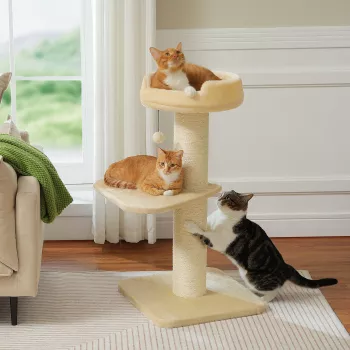
A well-built cat tree can turn a small indoor space into a climbing, scratching, lounging, and observing zone that keeps cats active while helping protect furniture. This tower combines thick sisal-wrapped posts for daily scratching with a plush flower-shaped bed designed for comfortable napping—especially helpful for larger cats that need stable platforms and roomy rest spots.
What This Cat Tree Tower Adds to a Cat’s Daily Routine
Indoor cats thrive when their environment lets them act like cats. A vertical tower with scratch-ready posts and a comfortable top bed helps organize the day into natural “mini activities” that are easy to repeat.
- Supports natural behaviors: scratching, climbing, perching, and resting in one footprint.
- Provides an appealing alternative to sofas and carpets by placing scratch zones where cats already spend time.
- Encourages movement and light exercise indoors, which can help reduce boredom-related behaviors.
- Creates a predictable “safe spot” for naps and observation, useful in multi-pet homes.
For broader enrichment ideas that complement a cat tree (like creating resting zones and predictable routines), helpful guidance is available from the American Association of Feline Practitioners (AAFP) and the ASPCA cat care resources.
Key Features That Matter for Large Cats
Big cats don’t just need “more space”—they need sturdier support during the moments that put the most stress on a tower: launching up, turning, and doing full-body scratch stretches.
- Thick sisal scratching posts: better grip and durability for heavier cats that scratch with more force.
- Plush flower bed: a soft, supportive top lounging area that helps cats settle quickly.
- Stable base and balanced vertical layout: reduces wobble when a large cat jumps up or stretches tall.
- Soft surfaces where paws and joints land: improves comfort for cats that prefer cozy textures.
At-a-Glance Overview
- Best suited for: indoor cats that love scratching and elevated lounging, including larger breeds.
- Placement idea: near a window for bird-watching, or near the family area to keep cats engaged.
- Daily use pattern: scratch after waking, climb to perch, nap in the plush bed, repeat.
Quick Feature Summary
| Feature | Why it helps | What to look for at home |
|---|---|---|
| Thick sisal posts | Encourages scratching and helps redirect from furniture | Place where scratching already happens; keep nearby a sofa corner if needed |
| Plush flower bed | Comfortable napping spot with a cozy feel | Quiet corner or window area; add a familiar blanket if the cat is cautious |
| Vertical tower design | Adds climbing and perching without taking much floor space | Choose a spot with headroom and away from fragile shelves |
| Large-cat friendly stability | More confidence when jumping and stretching | Put on a flat surface; consider a corner placement for extra steadiness |
Scratching: How Thick Sisal Changes the Experience
Scratching is both a physical need and a daily habit, and the surface texture matters. Sisal offers a firm “grab” that many cats naturally prefer, especially when they want to pull and rake with their claws.
- Sisal texture provides strong resistance that many cats prefer over soft fabric scratchers.
- Thicker posts can handle full-body stretching, which is often how cats naturally scratch.
- Multiple scratch sessions per day are normal; durable wrapping helps the tree stay useful longer.
- Tip for faster adoption: rub a small amount of catnip on the post or reward after scratching.
If a cat currently scratches one specific couch corner, placing the tower close to that “favorite spot” can make the new post feel like the natural next step, rather than a separate destination across the room.
Comfort and Rest: The Plush Flower Bed Advantage
A cozy top bed is more than a cute detail. When the best nap spot is built into the same structure as the scratch zone, cats are more likely to return to the tower multiple times a day.
- A dedicated plush bed helps cats choose the tower for naps instead of laundry baskets or pillows.
- Raised sleeping areas can reduce stress for cats that like to monitor their surroundings.
- Soft texture can be especially appealing for cats that avoid hard perches.
- Maintenance habit: remove loose fur frequently so the bed stays inviting.
Placement and Setup Tips for Better Stability
If you want a sturdier tool for tightening during assembly (especially for frequent home projects), an 18″ Aluminum Pipe Wrench can be a practical addition to the toolbox.
Care and Longevity
Shop Cat Trees: Tower Option and a More Vertical Alternative
- Cat Tree Tower with Thick Sisal Scratching Posts & Plush Flower Bed for Large Cats — a compact footprint with durable scratch zones and a plush flower-shaped rest spot.
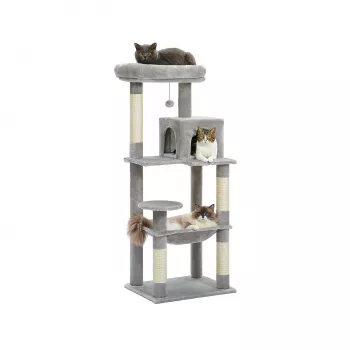
- 5-Level Cat Tree with Large Hammock, Scratching Posts, and Cozy Condo for Indoor Cats — more levels to spread out, plus a condo-like retreat and a hammock-style lounge.
FAQ
Is a thick sisal scratching post better for large cats?
Thicker sisal posts tend to feel more stable during strong scratching and support full-body stretching without shifting as much. They also usually hold up longer under heavier daily use, especially when the tower is assembled tightly and placed on a flat surface.
How can a cat be encouraged to use the scratching posts instead of the couch?
Place the cat tree right next to the couch corner your cat targets, then reward scratching on the post with a treat or praise. A small amount of catnip on the sisal can help at first, and temporarily covering the couch corner can make the new habit stick faster.
Where should a cat tree be placed for the most use?
Position it where your cat already likes to spend time—often near a window for watching outdoors or near the main family area. Set it on a stable, level surface (a corner can help) and avoid placing it near fragile items or in tight walkways.









Leave a comment